

ISO 27001 Annex A 8.27 Secure Systems Architecture and Engineering Principles is an ISO 27001 control that requires an organisation to design security into all architecture layers in the development lifecycle. You may hear the term ‘security by design and default’.
In this guide you will learn how to implement ISO 27001 Annex A 8.27 and pass your audit from ISO 27001 Lead Auditor Stuart Barker – author of the ultimate ISO 27001 Toolkit.
Table of contents
Key Takeaways

- You don’t just “build things and secure them later.”
- Instead, you must apply established security principles, like Zero Trust and Defence in Depth, from the very first whiteboard sketch of a new system.
Purpose & Definition
ISO 27001 Annex A 8.27 is a preventive control to ensure information systems are securely designed, implemented and operated within the development life cycle.
The ISO 27001 Standard defines ISO 27001 Annex A 8.27 as:
Principles for engineering secure systems should be established, documented, maintained and applied to any information system development activities.
ISO/IEC 27001:2022 Annex A 8.27 Secure Systems Architecture and Engineering Principles
Implementation Guide
Whilst I am a software engineering degree educated and time served professional, I am not in the business of telling you how to develop either systems or software. These are professions in their own right. Time has moved on. What I am going to do is show you want the ISO 27001 standard expects in the implementation for you to achieve ISO 27001 certification. These are on the whole, no brainers, common sense and what you would expect but let us take a look anyway.
Security Engineering Principles
You are going to establish, document and apply information security principles and activities. This will be designed into all architecture layers such as the business, data, application, network and technology layers.
It will include:
- Security Controls – the full range of controls required to protect against identified threats
- Security Events – the capability of controls to protect from, respond to and detect security events
- Business Process Specifics – controls required by particular business controls such as digital signature, encryption or integrity checking
- Application – where the controls are applied
- Integration – how the controls work together
Considerations
The principles will take account of the need to integrate with a security architecture, technical architecture, capability of the organisation, costs, time, complexity and current good practices when agreeing the principles.
Techniques
Secure system engineering techniques include
- Security architecture principles such as – least privilege, security by default, security by design, defence in depth
- Design reviews focussed on security
- Documentation of controls
- Documentation of controls that do not meet requirements
- System Hardening
- Tamper resistance
- Segregation
- Secure Virtualisation
Zero Trust
Zero Trust as a principle is something you will consider and demonstrate and examples are
- Not relying only on network perimeter security
- Using the phrase ‘never trust always verify’ for access to information
- Encrypting information end to end
- Not trusting anything inside or outside a network and treating it as if it came from an open and external network
- Using least privilege for access control
- Authenticating and validating requests for information systems, always, based on authentication information, user identities, data classification.
- Enforcing strong / multi factor authentication
Third party developers
This control applies in equal measure to third party developers and should be enforced via contract or legally binding agreements and alignment between the third party and the outsourced developer should be in place.
Reviews
Reviews should be in place to ensure controls and principles are appropriate and effective.
Secure Development Policy
If you are developing software then the first step is to create, or download, your secure development policy. The secure development policy set’s out what you do for information security in the context of software and systems development. It does not set out how you do it, as how you do it is covered in your processes.
For more detail on software development read –ISO 27001 Annex A 8.25 Secure Development Life Cycle We cover it in more detail in that guide.
Secure Development Policy Template
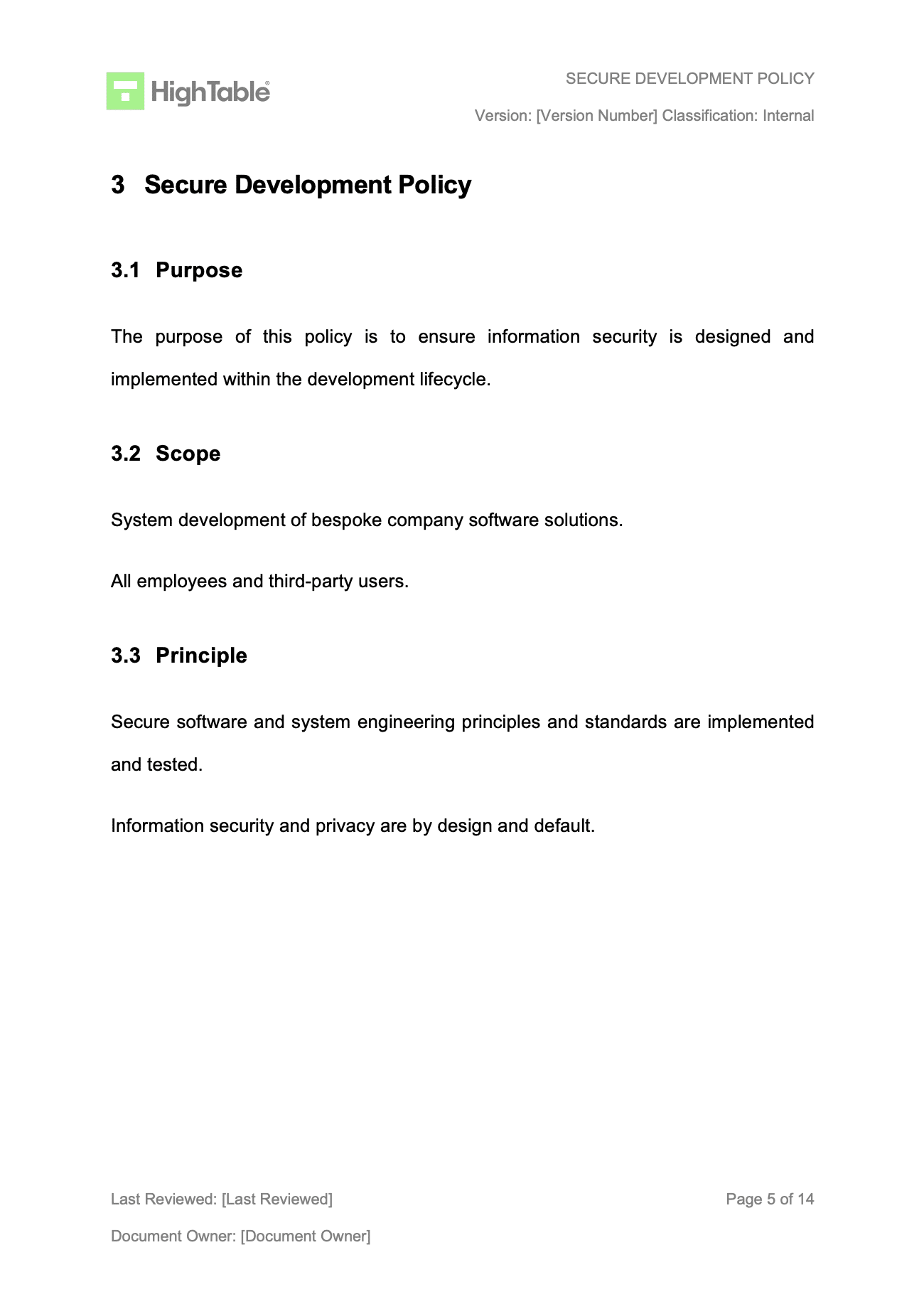
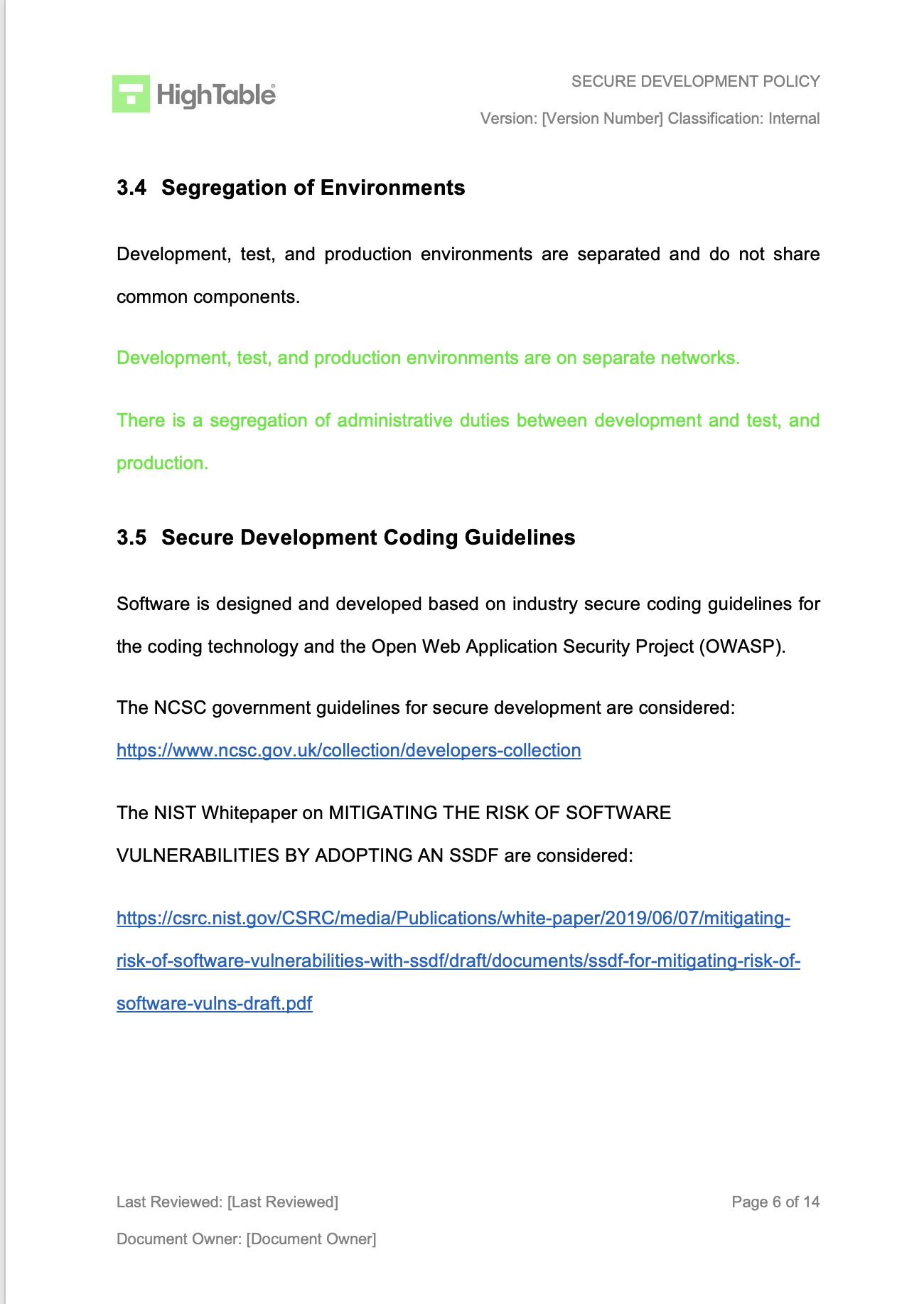
The secure development policy sets out your approach to Secure Systems Architecture and Engineering Principles.
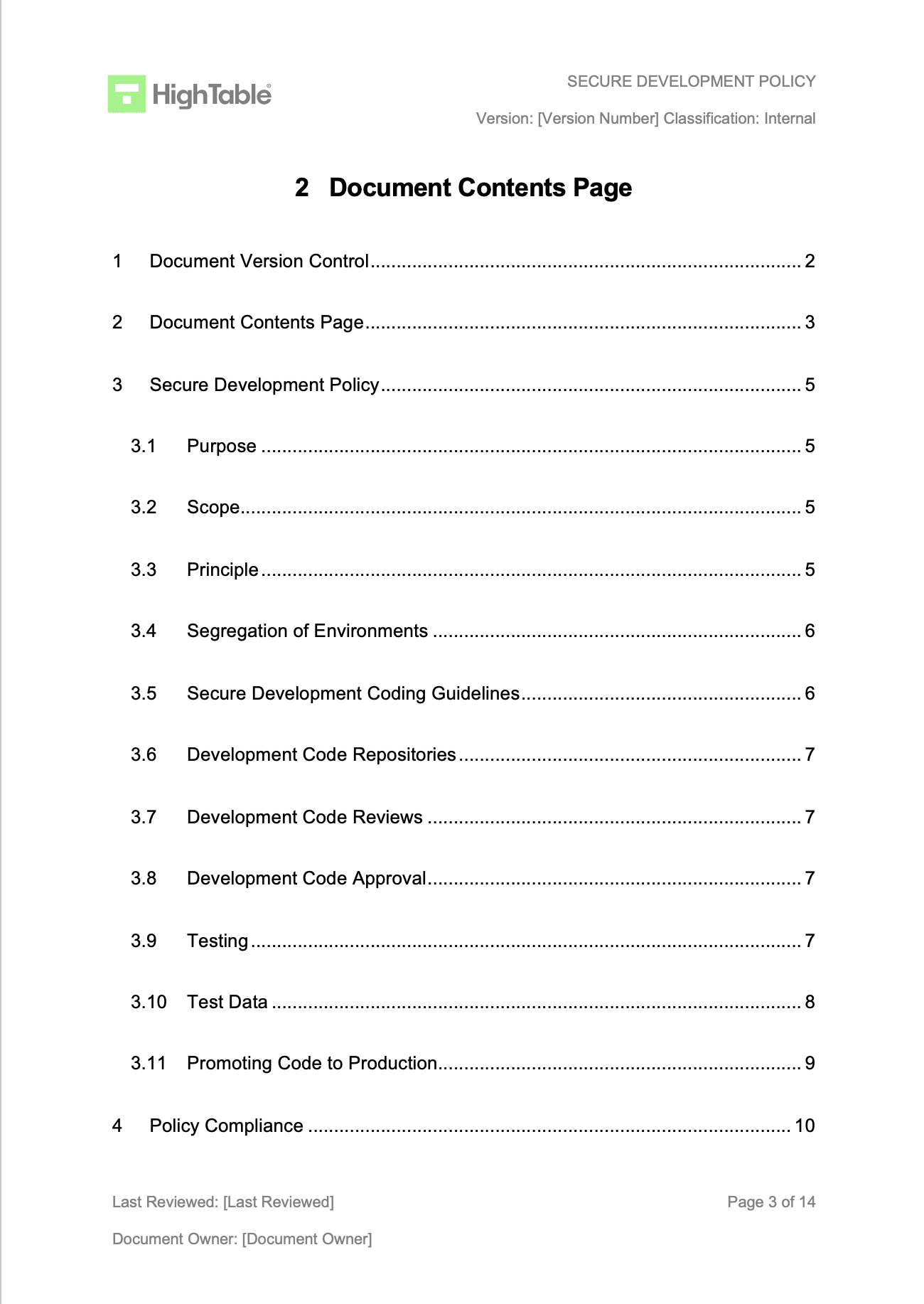
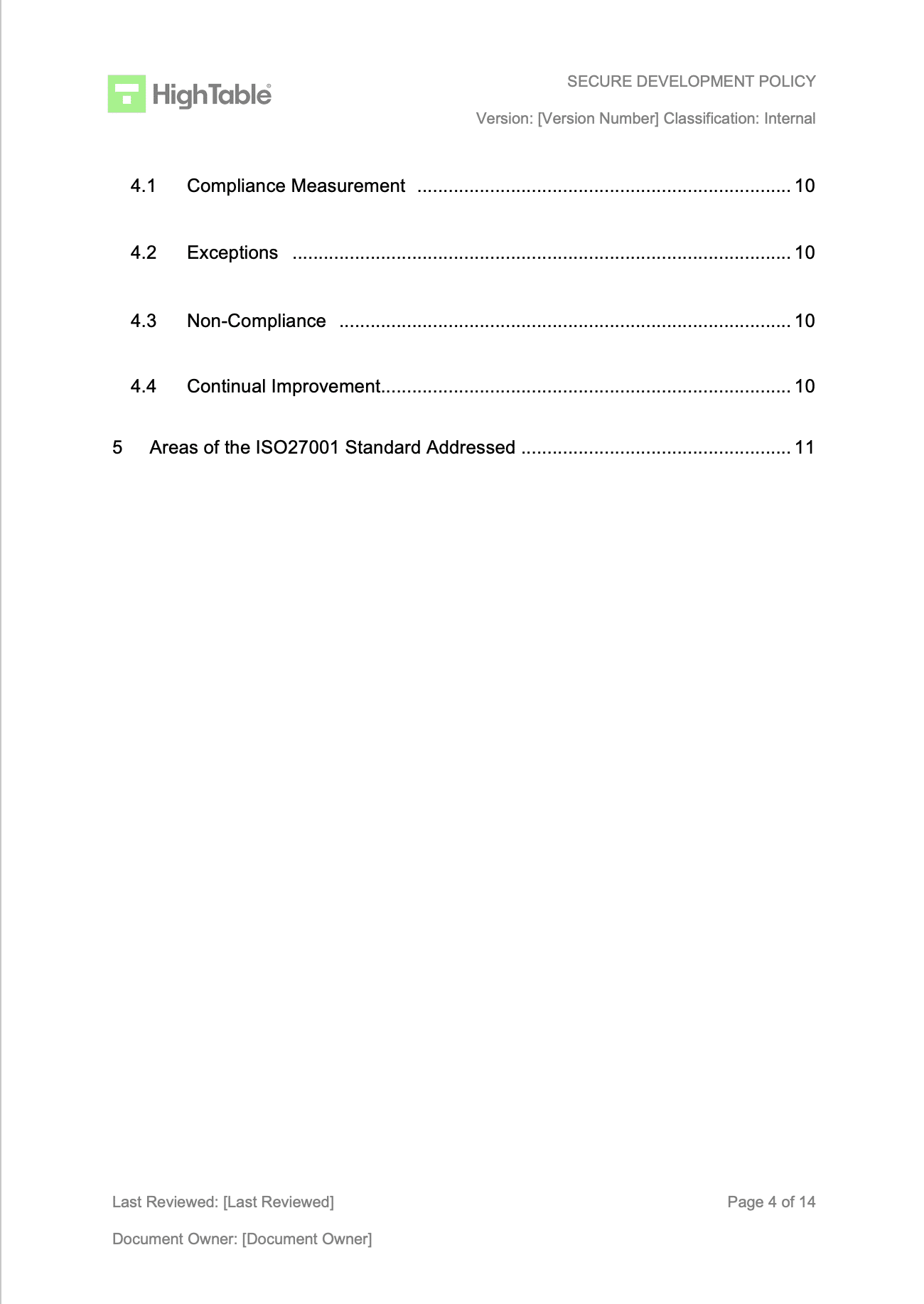
Secure Development Policy Example
An example of the ISO 27001 secure development policy.
How to implement ISO 27001 Annex A 8.27
Implementing secure systems architecture and engineering principles is fundamental to building resilient infrastructure that protects information assets by default.
1. Formalise Secure Engineering Principles and Standards
- Document a comprehensive set of secure engineering principles, such as “Security by Design,” “Defence in Depth,” and “Fail-Safe Defaults,” to guide all architectural decisions.
- Establish technical requirements for data encryption at rest and in transit, ensuring that centralised cryptographic standards are applied across all platforms.
- Result: A consistent architectural baseline that reduces the risk of security gaps caused by ad hoc design choices.
2. Integrate Security by Design into the SDLC
- Incorporate mandatory threat modelling sessions during the initial design phase of any system or major update to identify potential attack vectors early.
- Define security requirements as part of the functional specifications, ensuring that controls like audit logging and input sanitisation are treated as core features.
- Result: Lower remediation costs and improved system resilience by identifying and mitigating architectural flaws before coding begins.
3. Provision Layered Defence and Network Segmentation
- Deploy a layered security model that includes Web Application Firewalls (WAF), Intrusion Prevention Systems (IPS), and micro-segmentation to isolate critical workloads.
- Utilise Virtual Private Clouds (VPC) and strictly defined Network Access Control Lists (NACLs) to prevent lateral movement within the environment.
- Result: A “Defence in Depth” posture that ensures the failure of a single control does not lead to a total system compromise.
4. Enforce Zero Trust and Granular Identity Management
- Implement a Zero Trust Architecture (ZTA) where no user or device is trusted by default, regardless of their location on the network.
- Provision granular Identity and Access Management (IAM) roles using Attribute-Based Access Control (ABAC) or Role-Based Access Control (RBAC) to enforce the Principle of Least Privilege.
- Result: A significantly reduced blast radius during an incident by ensuring users only have access to the specific resources required for their role.
5. Automate Architecture Validation via Infrastructure as Code (IaC)
- Utilise Infrastructure as Code (IaC) templates (e.g. Terraform or CloudFormation) to define the system architecture in a repeatable and auditable format.
- Integrate automated IaC scanning tools into the CI/CD pipeline to detect misconfigurations, such as public S3 buckets or unencrypted databases, prior to deployment.
- Result: Continuous compliance and the elimination of “configuration drift” through automated, policy-based infrastructure deployment.
6. Conduct Periodic Architectural Security Reviews
- Perform regular technical audits and architectural reviews to ensure that existing systems continue to meet the evolving security standards of the organisation.
- Evaluate the impact of new technologies or external threats on the current architecture, updating the secure engineering guidelines as necessary.
- Result: A dynamic security posture that evolves in response to new vulnerabilities and changing business requirements.
Conclusion
This control is very specific to those that do development and is a very technical control. You will require the input of specialist technical resources across multiple, relevant domains. The advice is to document everything.
ISO 27001 Annex A 8.27 FAQ
Common principles cited in ISO 27001 implementations include “Security by Design” and “Defence in Depth.” While you can choose principles that fit your technology stack, auditors typically look for:
Least Privilege: Systems and users should only have the access strictly necessary for their function.
Defence in Depth: Using multiple layers of security controls (e.g., firewalls + MFA + encryption) so that if one fails, others remain.
Fail Secure: If a system crashes or fails, it should default to a “locked” state rather than an “open” one.
Zero Trust: Never trusting a user or device by default, even if they are inside the corporate network.
Yes, secure architecture principles apply to how you configure and integrate cloud services, even if you don’t own the hardware. For a cloud environment, compliance involves:
Network Segmentation: Designing Virtual Private Clouds (VPCs) with strict subnets.
Identity Management: Architecting centralised Single Sign-On (SSO) rather than scattered local accounts.
Data Flow Security: Ensuring encryption architecture covers data both at rest and in transit between microservices.
Principles must be applied at the earliest possible stage of the project lifecycle, often referred to as “Shift Left.” Retrofitting security architecture after a system is built is costly and ineffective. Evidence should show these principles were consulted during:
The initial requirements gathering phase.
The architectural design review.
The selection of third-party components or vendors.
Control 8.25 covers the process (the lifecycle), while Control 8.27 covers the rules (the principles).
Annex A 8.25 (Secure Development Lifecycle): Defines when to test and who approves changes (The “How”).
Annex A 8.27 (Architecture & Engineering): Defines the standards the code must meet, such as “All inputs must be validated” or “All passwords must be salted” (The “What”).
Auditors will ask to see your documented engineering principles and proof they are actually used in projects. Be prepared for questions such as:
“Do you have a document listing your secure architecture principles?”
“Show me a design document for a recent project where these principles were considered.”
“How do you ensure new tools or software purchases align with your security architecture?”
Related ISO 27001 Controls
- ISO 27001 Annex A 8.29 Security Testing in Development and Acceptance
- ISO 27001 Annex A 8.30 Outsourced Development
ISO 27002:2022 Control 8.27
ISO 27002 Control 8.27 provides implementation guidance for Architecture and Engineering Principles.
ISO 27001 Annex A 8.27 Control and Attributes Table
| Control type | Information security properties | Cybersecurity concepts | Operational capabilities | Security domains |
|---|---|---|---|---|
| Preventive | Confidentiality | Protect | Application Security | Protection |
| Integrity | System and Network Security | |||
| Availability |
Stuart Barker
Stuart Barker is qualified ISO 27001 Lead Auditor and a veteran practitioner with over 30 years of experience in systems security and risk management. Holding an MSc in Software and Systems Security, he combines academic rigour with extensive operational experience, including a decade leading Data Governance for General Electric (GE).
Now he is founder and Lead ISO 27001 Consultant at High Table, the worlds number 1 dedicated ISO 27001 Consultancy.
