The ISO 27001 Clause 4.1 implementation checklist is designed to help an ISO 27001 Lead Implementer implement ISO 27001 Clause 4.1.
It complements the guide – How to implement ISO 27001 Clause 4.1
Use this checklist to support the implementation of the Context of the Organization.
Table of contents
Introduction
The ISO 27001 Clause 4.1 Understanding The Organisation And Its Context Implementation Checklist
Time needed: 1 hour
ISO 27001 Clause 4.1 Understanding The Organisation And Its Context Implementation Checklist
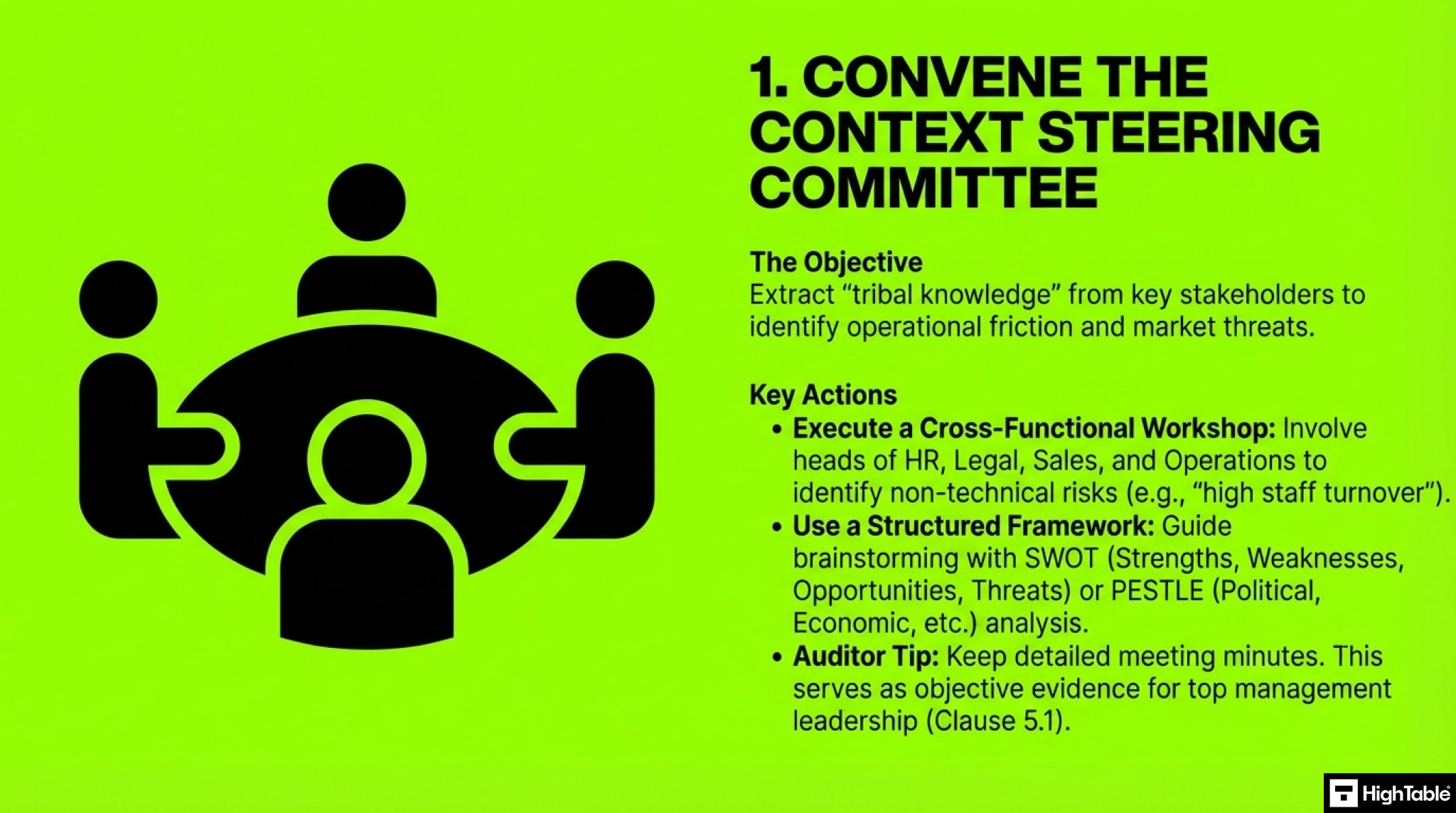
- Convene the Context Steering Committee
The Objective: Extract “tribal knowledge” from key stakeholders to identify operational friction and market threats.
Execute a Cross-Functional Workshop: Do not rely solely on the IT department. Convene a session with heads of HR, Legal, Sales, and Operations. Their unique perspectives are required to identify non-technical risks (e.g., “high staff turnover” or “aggressive sales targets”).
Brainstorming Protocol: Structure the session using a SWOT Analysis (Strengths, Weaknesses, Opportunities, Threats) or PESTLE Analysis (Political, Economic, Social, Technological, Legal, Environmental) to ensure no category is missed.
Auditor Tip: Keep minutes of this meeting. This serves as objective evidence of top management leadership (Clause 5.1).
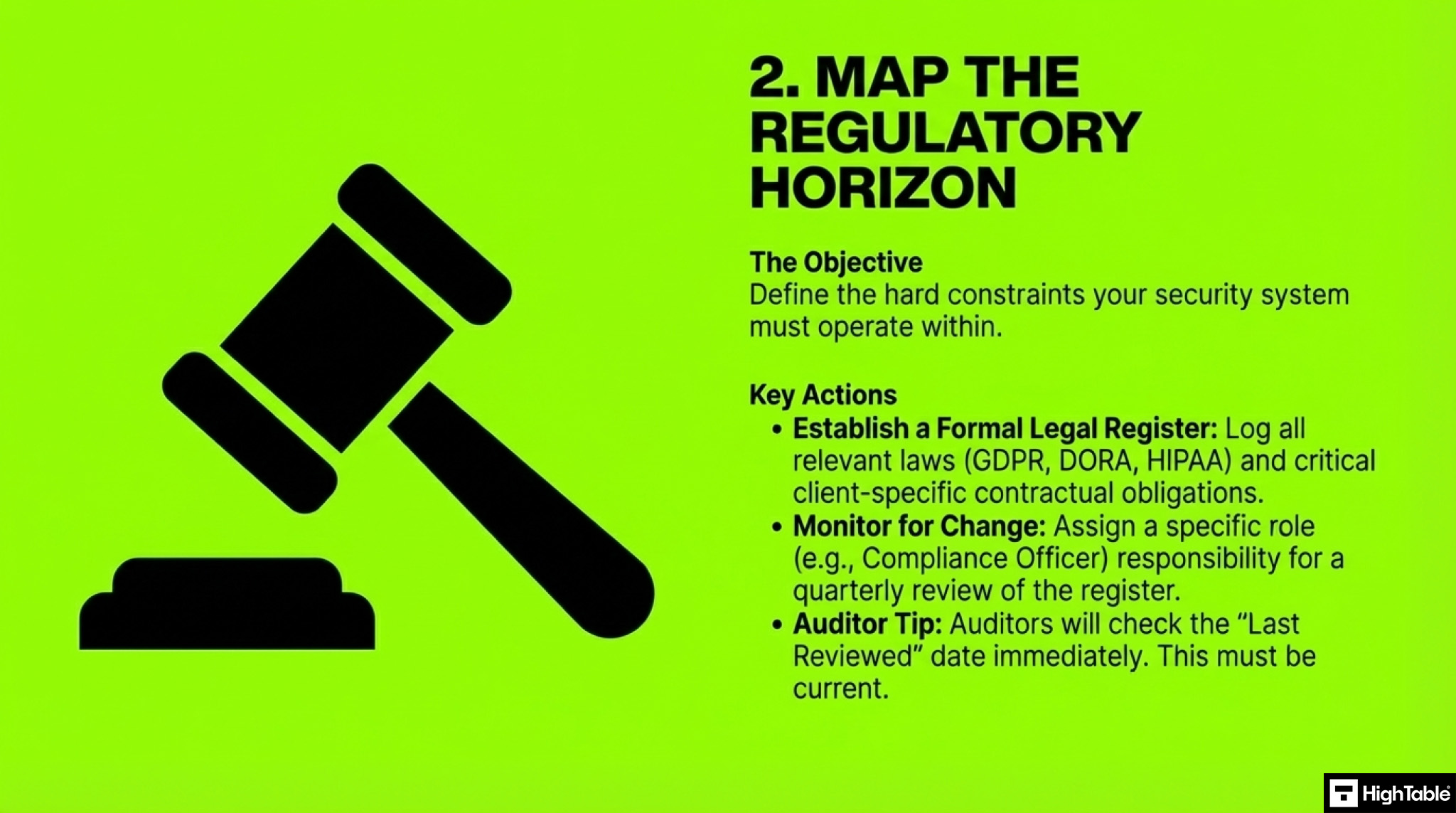
- Map the Regulatory Horizon
The Objective: Define the hard constraints your security system must operate within.
Establish a Legal Register: You cannot claim compliance if you don’t know the laws governing your data. Use an [ISO 27001 Legal Register Template] to formally log GDPR, DORA, HIPAA, and client-specific contractual obligations.
Monitor Change: Compliance is dynamic. Assign a specific role (e.g., the Compliance Officer) to review this register quarterly. An auditor will check the “Last Reviewed” date immediately.
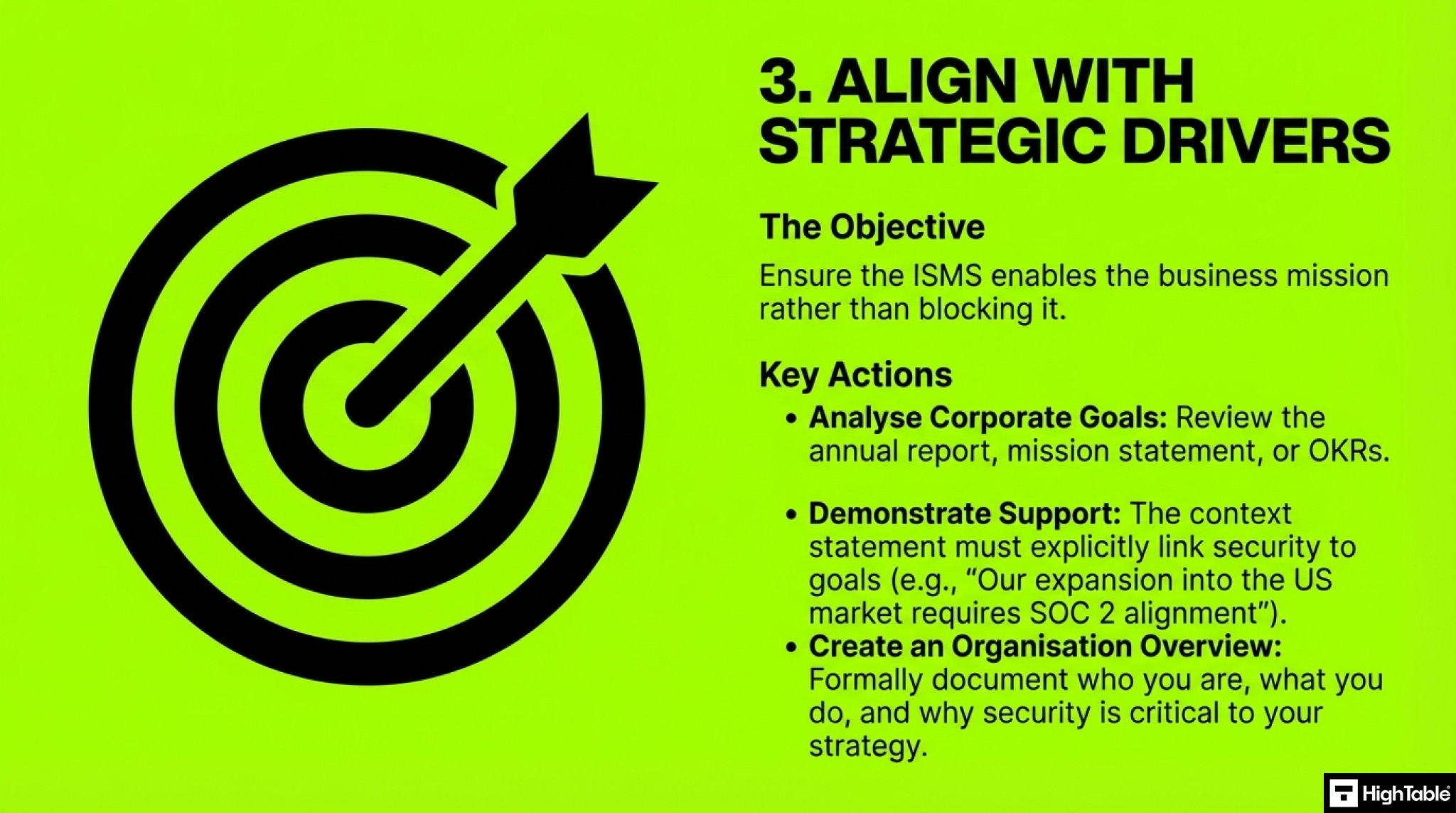
- Align with Strategic Drivers
The Objective: Ensure the ISMS enables the business mission rather than blocking it.
Analyse Corporate Goals: Review the organisation’s annual report, mission statement, or OKRs. Your context statement must demonstrate how information security supports these goals (e.g., “Our goal to expand into the US market requires SOC 2 alignment”).
Document the Overview: Create a formal [Organisation Overview] that defines who you are, what you do, and why security matters to your valuation.
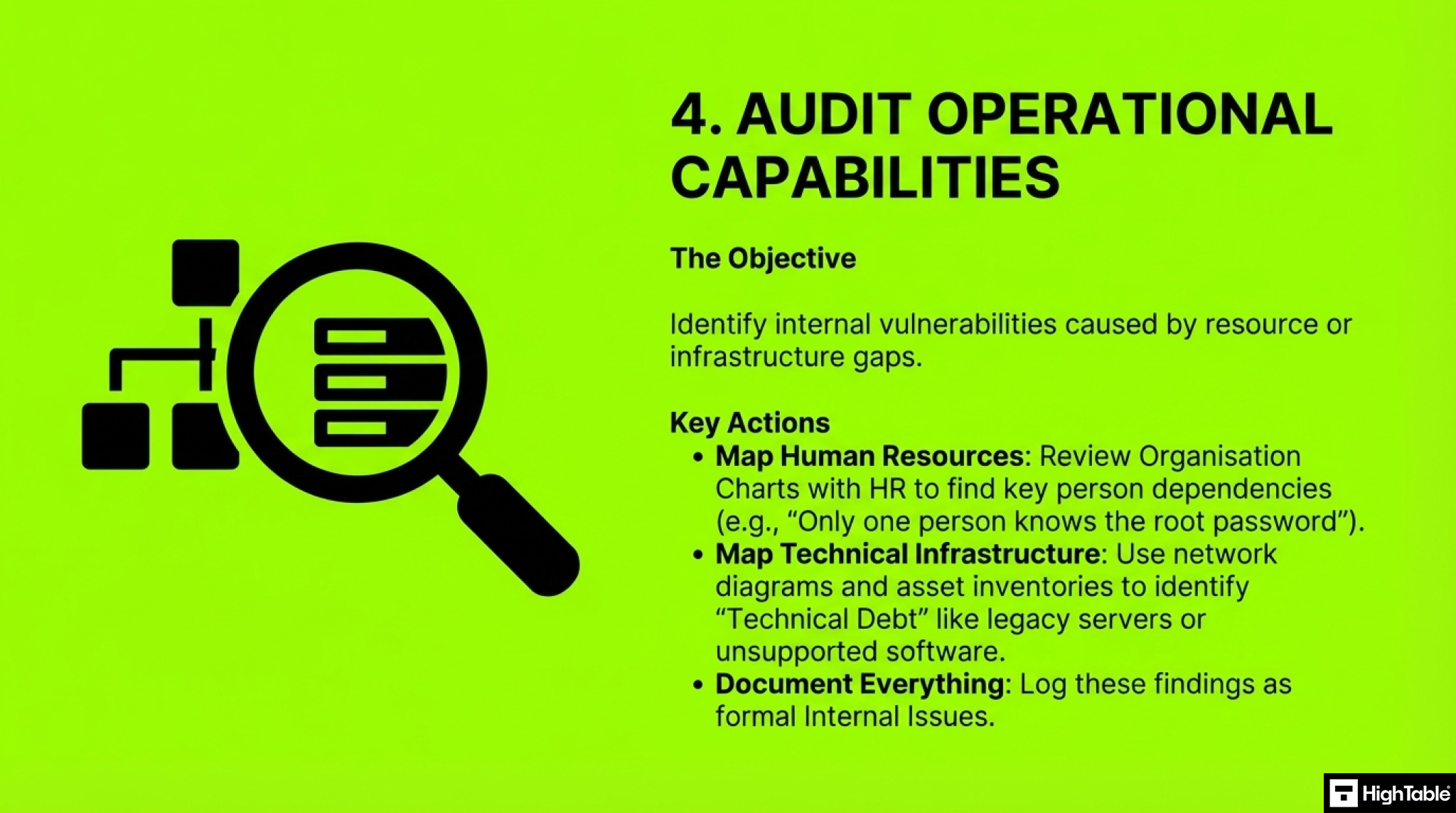
- Audit Operational Capabilities
The Objective: Identify internal vulnerabilities caused by resource or infrastructure gaps.
Map Human Resources: Work with HR to review Organisation Charts. Identify key person dependencies (e.g., “Only one person knows the root password”) and document these as Internal Issues.
Map Technical Infrastructure: Review network diagrams and asset inventories. Identify “Technical Debt” (e.g., legacy servers, unsupported software) that creates inherent risk.
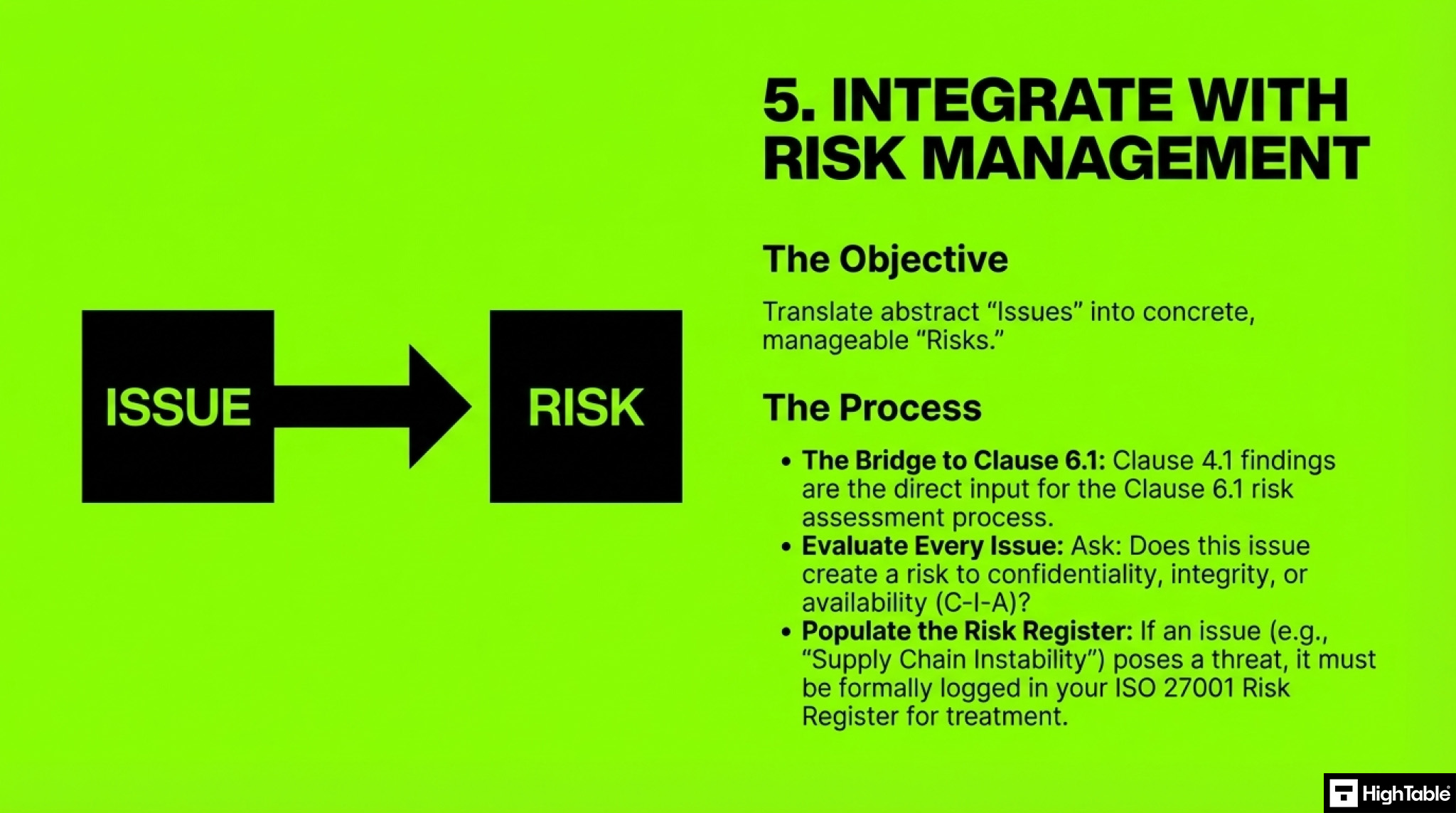
- Integration with Risk Management
The Objective: Translate “Issues” into “Risks.”
The Bridge to Clause 6.1: Clause 4.1 is the input; Clause 6.1 is the process. Every issue identified in Steps 1-4 must be evaluated. Does this issue create a risk to confidentiality, integrity, or availability?
Populate the Register: If an issue (e.g., “Supply Chain Instability”) poses a threat, it must be formally logged in your [ISO 27001 Risk Register] for treatment.
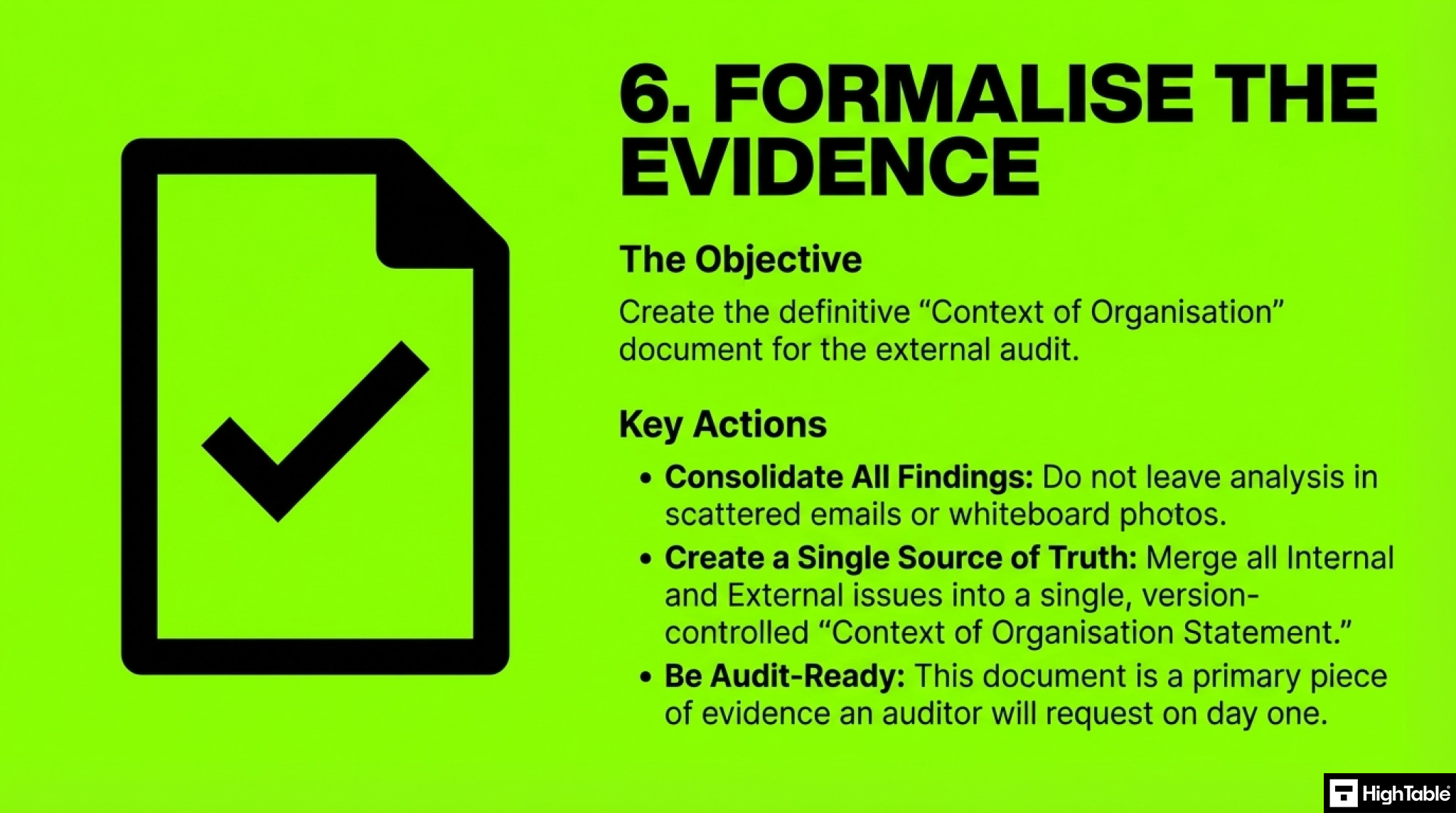
- Formalise the Evidence
The Objective: Create the “Context of Organisation” document for the external audit.
The “Accelerator”: Don’t draft this from scratch. The ISO 27001 Implementation Suite includes a pre-configured Context Template that maps these requirements directly to the auditor’s checklist.
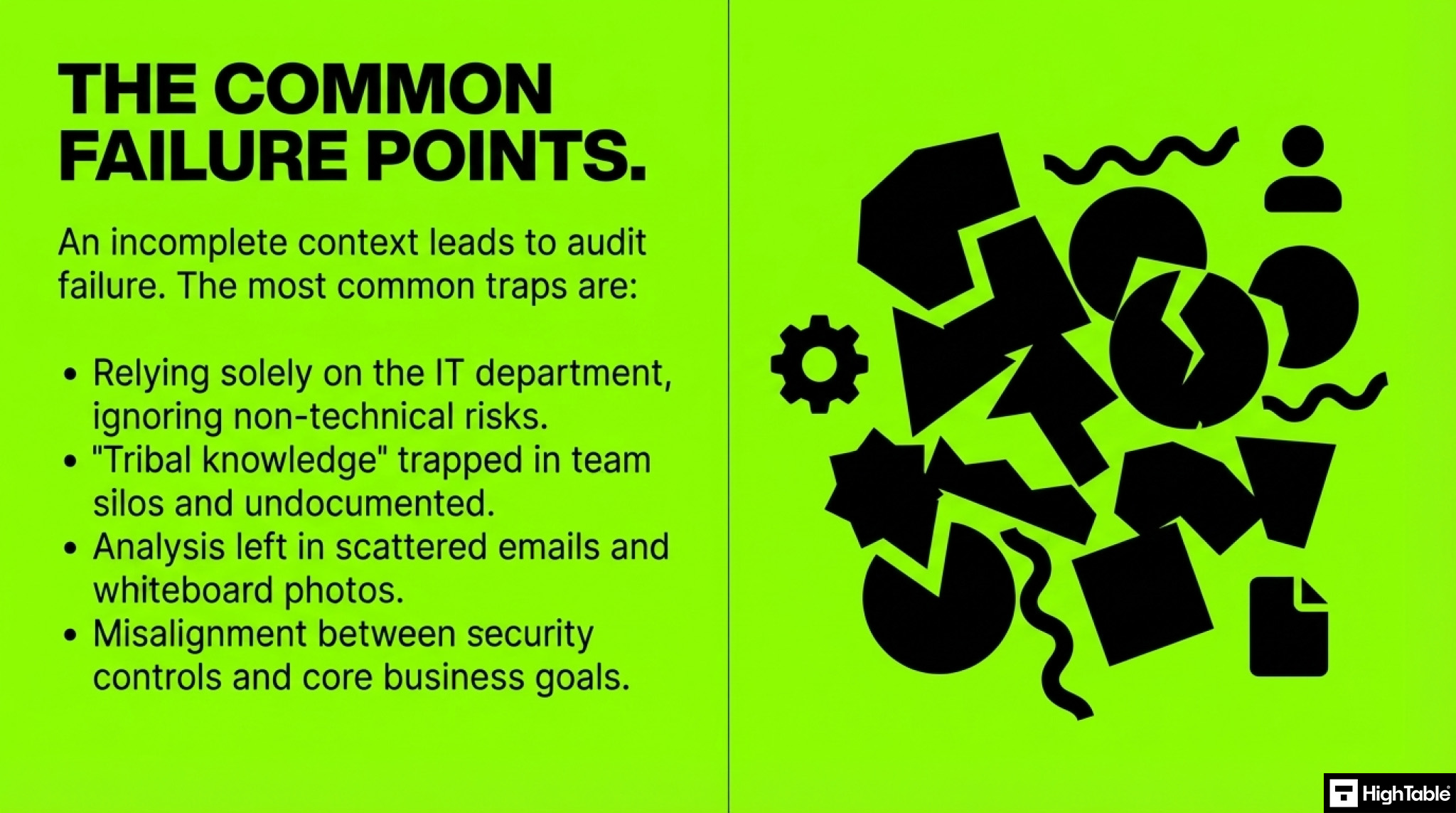
Consolidate Findings: Do not leave your analysis in scattered emails or whiteboard photos. Consolidate your Internal and External issues into a single, version-controlled [Context of Organisation Statement].
Further Reading
How to implement ISO 27001 Clause 4.1
ISO 27001 Clause 4.1 Implementation Checklist
How to audit ISO 27001 Clause 4.1
ISO 27001 Clause 4.1 Audit Checklist
ISO 27001:2022 Amendment 1 – Absolutely Everything You Need to Know
ISO27001:2022 Amendment 1 Climate Action Changes – Definitive Briefing
ISO 27001 Clause 4.1 Understanding the Organisation and Its Context Explained
About the author