

ISO 27001 Continual Improvement Policy Template Example
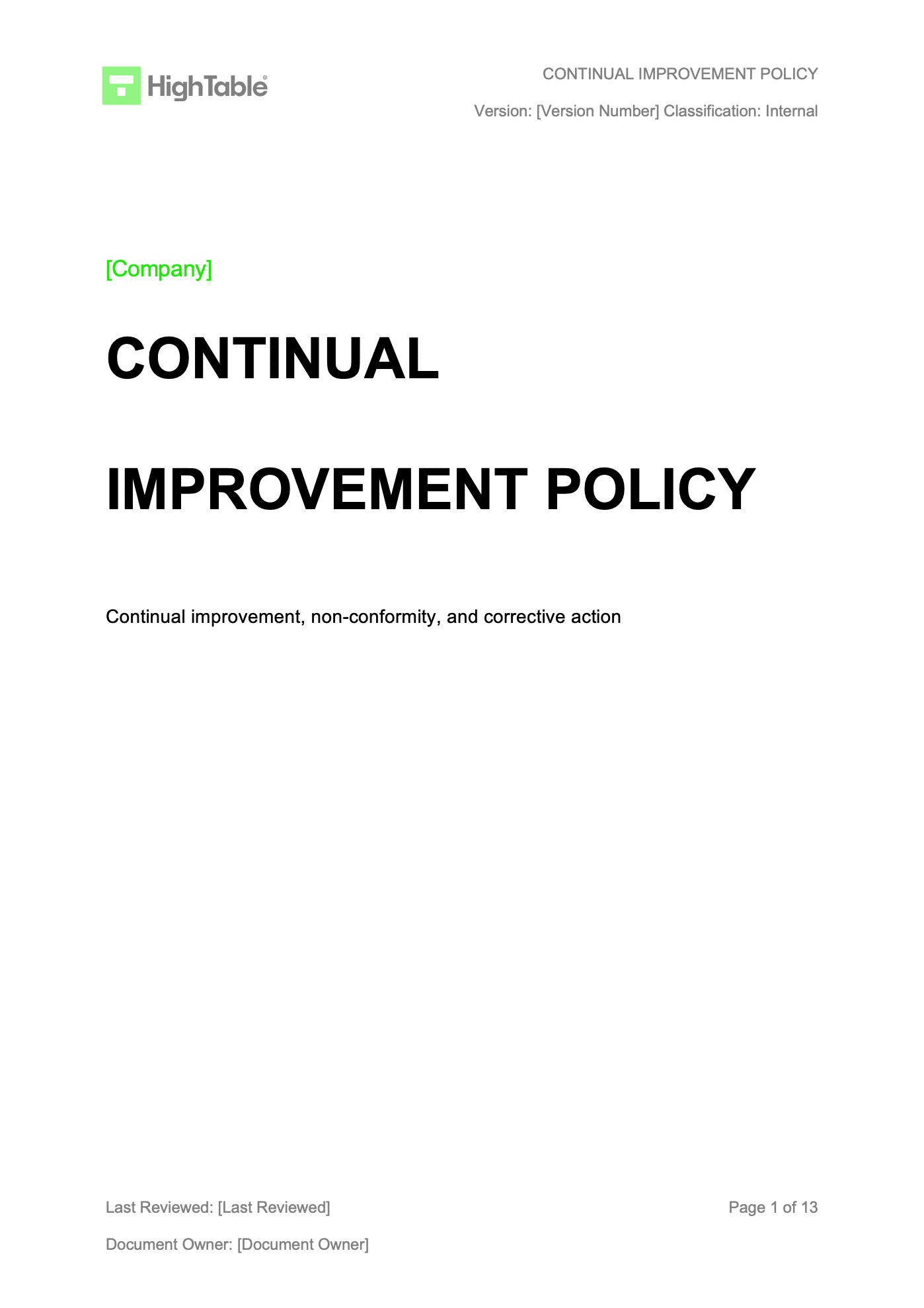
ISO 27001 Continual Improvement Policy Template FAQ
The ISO 27001 Continual Improvement Policy Template is in Microsoft Word format
The ISO 27001 Continual Improvement Policy fully supports ISO/IEC 27001:2013 and ISO/IEC 27002:2013 and ISO/IEC 27002:2022.
The ISO 27001 Continual Improvement Policy Template meets the requirements of ISO 27001 Clause 10.1 Continual Improvement
You can read more in ISO 27001 Continual Improvement Explained
No. The ISO 27001 Continual Improvement Policy Template is designed to be easy to implement and easy to configure. It comes with an easy to follow step by step guide. You are provided with a free hour of training if you need it.
Yes. It fully meets the 2022 updated requirements to the ISO 27001 standard. It is also backward compatible with previous versions of the standard.
It is 100% complete. It just requires a fast rebrand, checking and some minor additions that are clearly sign posted and marked
It depends on what you are trying to achieve. It works as a stand alone template but is designed to be part of the ISO 27001 Toolkit that meet the needs of your business. We sell the ISO 27001 Templates Toolkit at a significant discount.
We estimate that on average it will take you less about 60 seconds to configure it and 15 minutes to deploy it. The templates require information that you know so there is nothing complicated.
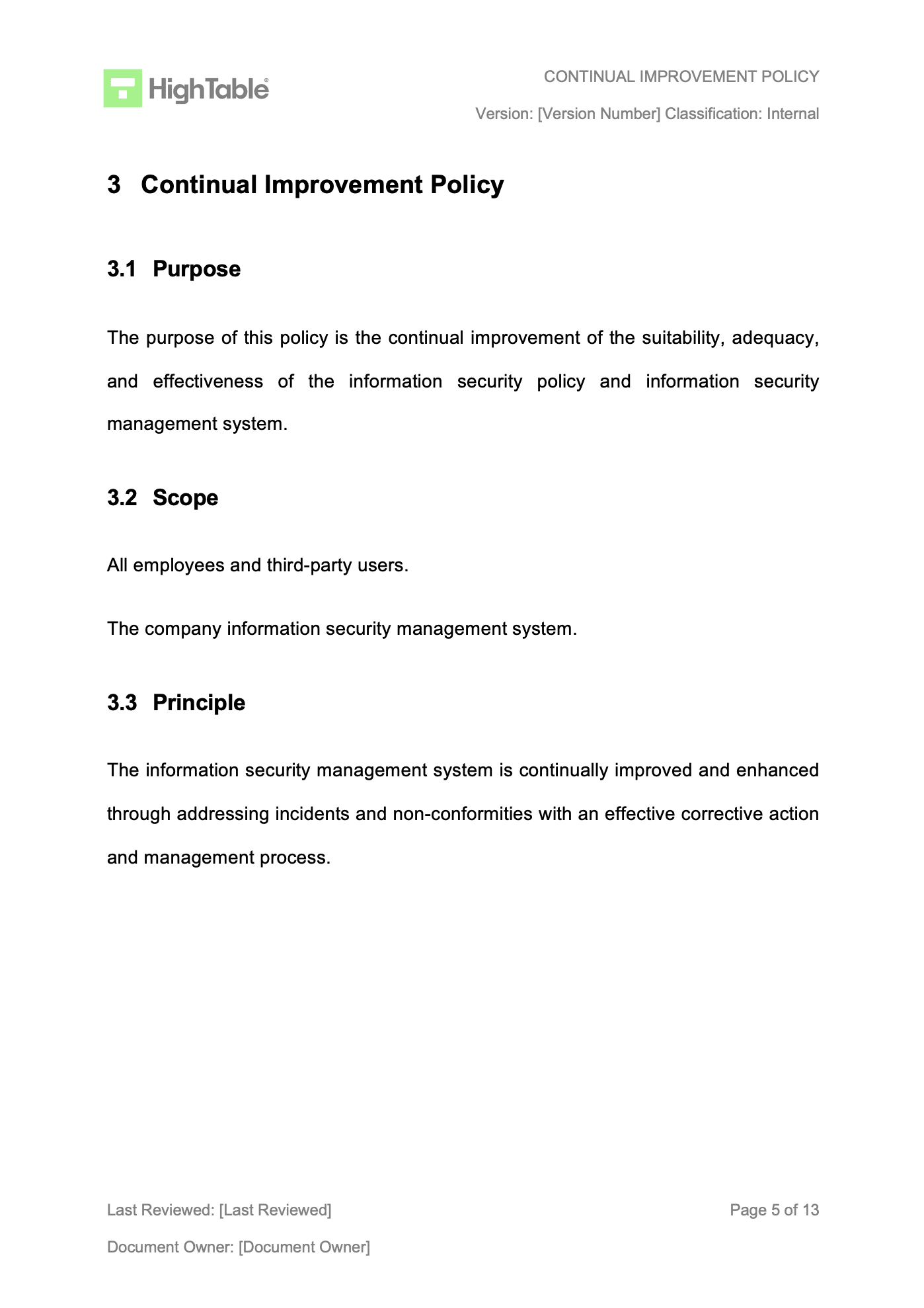
The ISO 27001 Continual Improvement Policy Template sets out what you do for continual improvement in your organisation. It is a requirement of the ISO 27001 standard. It is not how you do continual improvement, that is covered in your continual improvement process.
The purpose of the ISO 27001 Continual Improvement Policy Template is to clearly communicate what you do for Continual Improvement to employees, clients, auditors and interested parties. It is fully populated to fast track your implementation.
The cost of the ISO 27001 Continual Improvement Policy Template is £9.97. The price can vary depending on currency exchange rates and the running of promotions and offers.
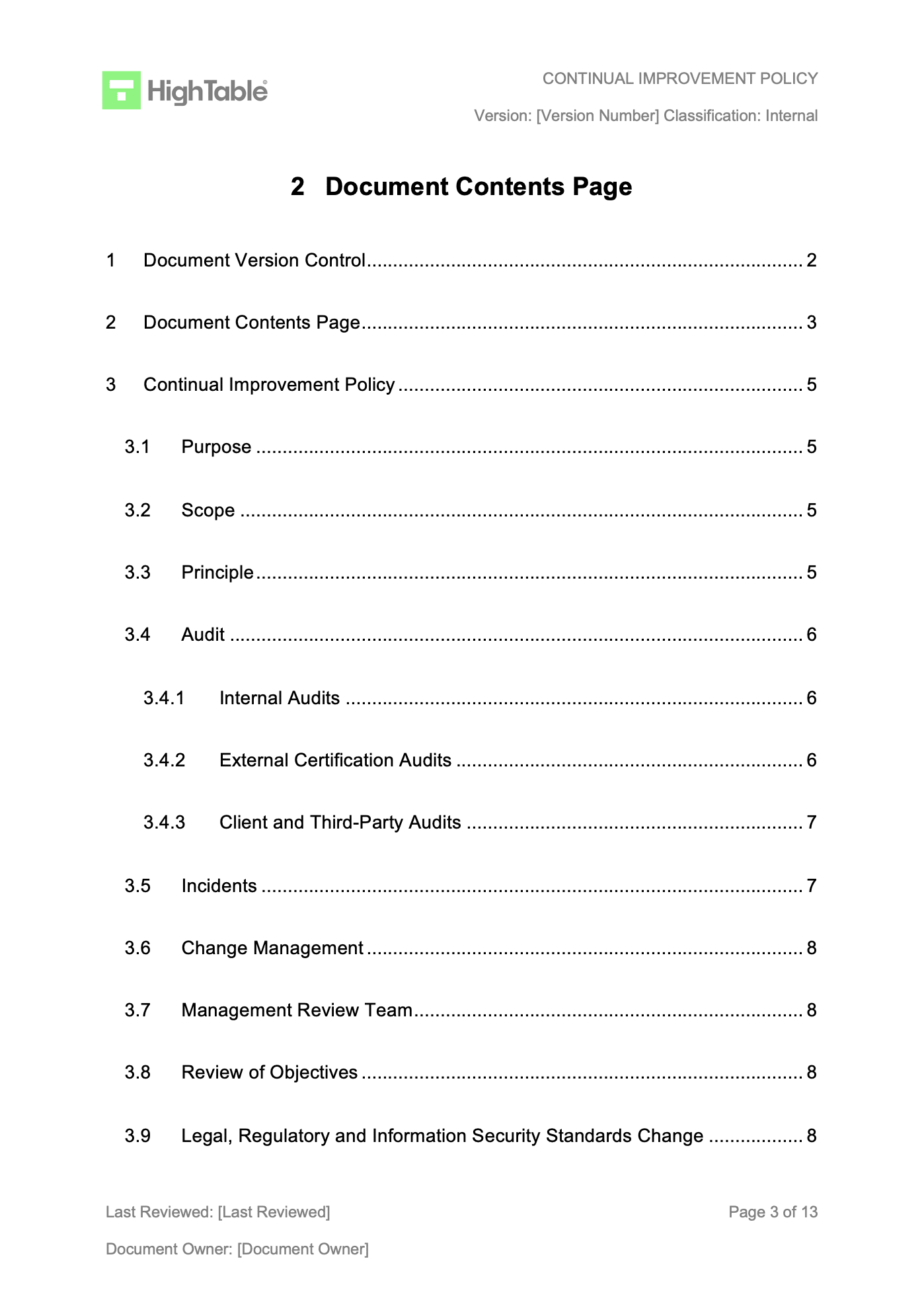
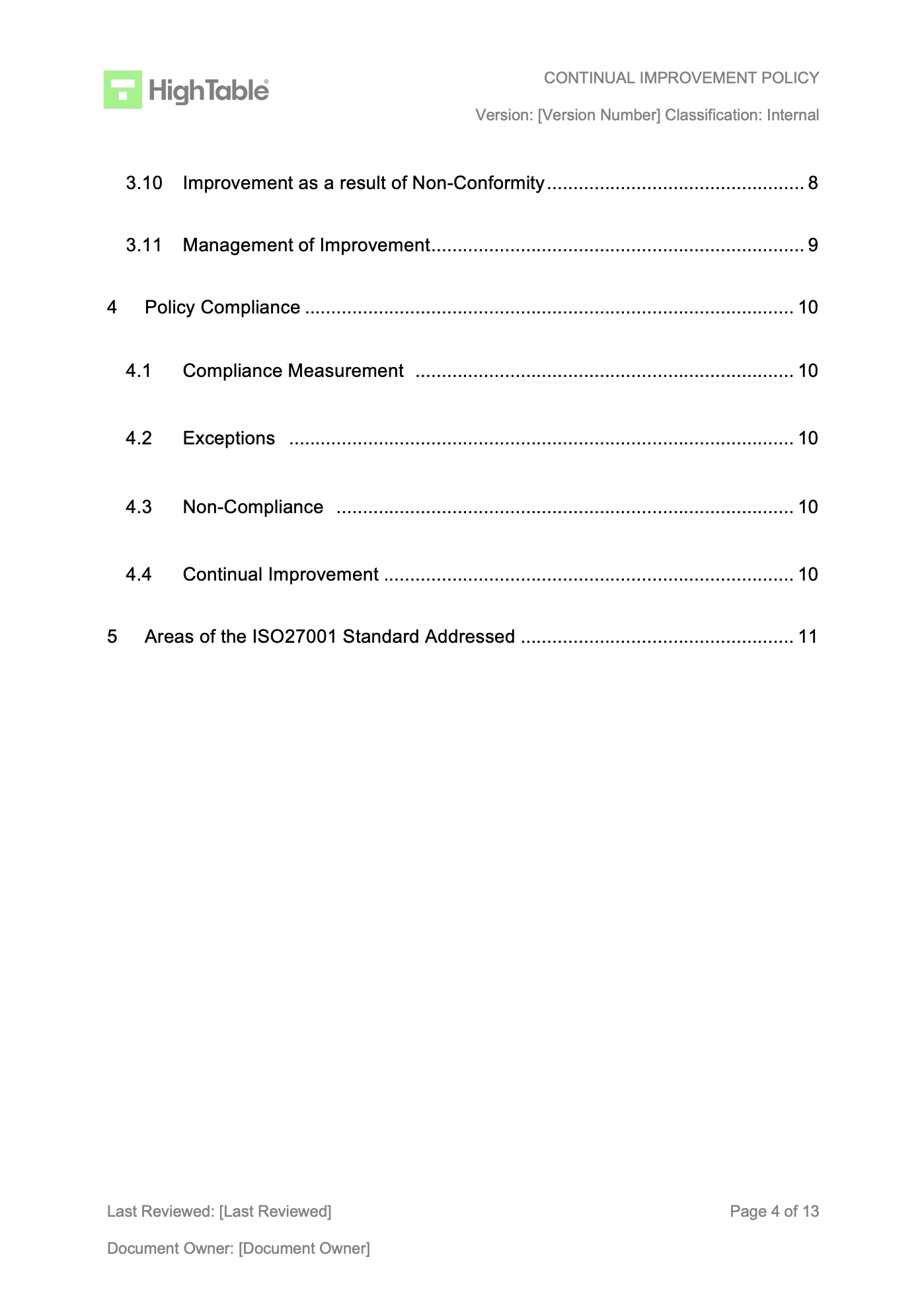
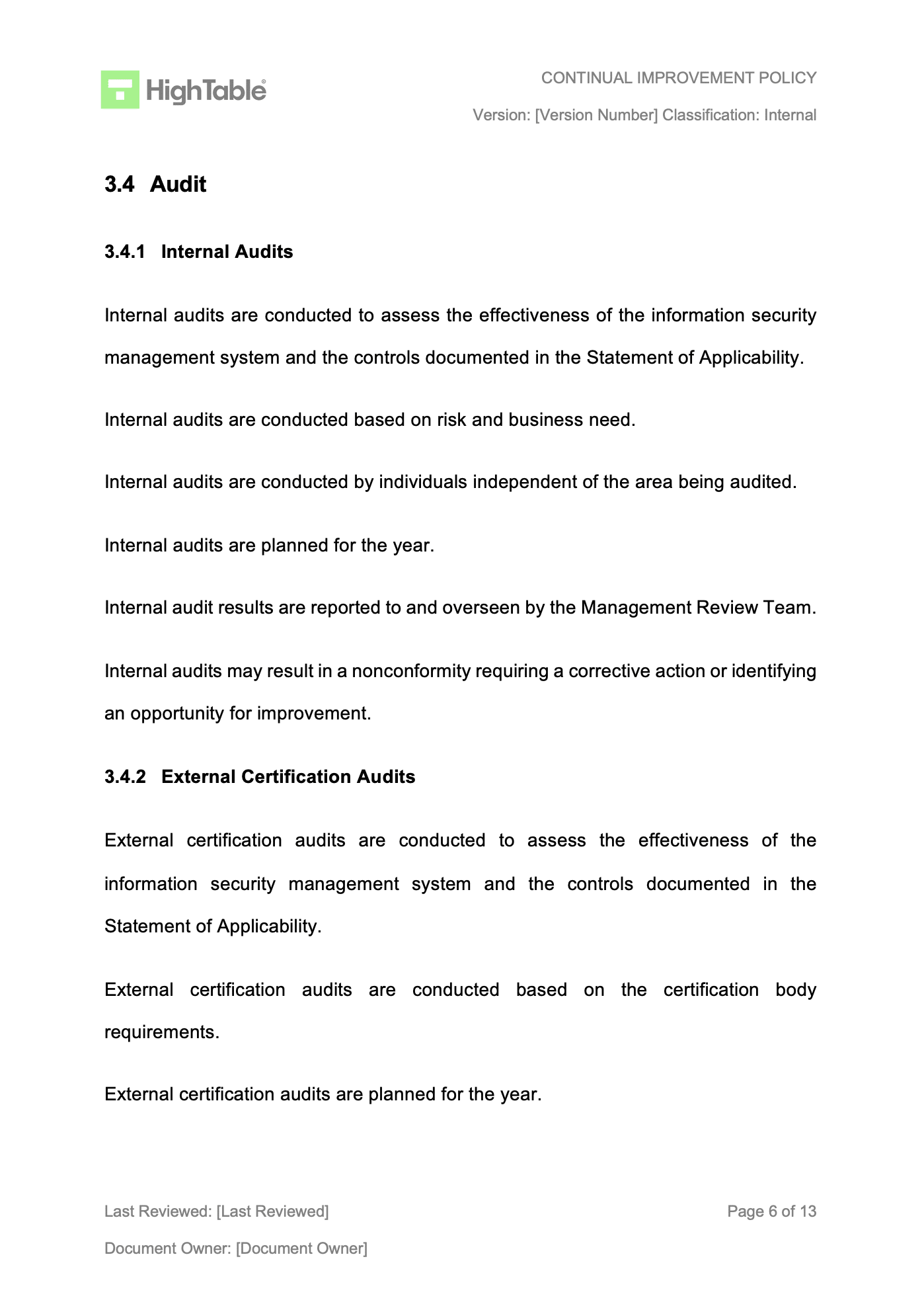
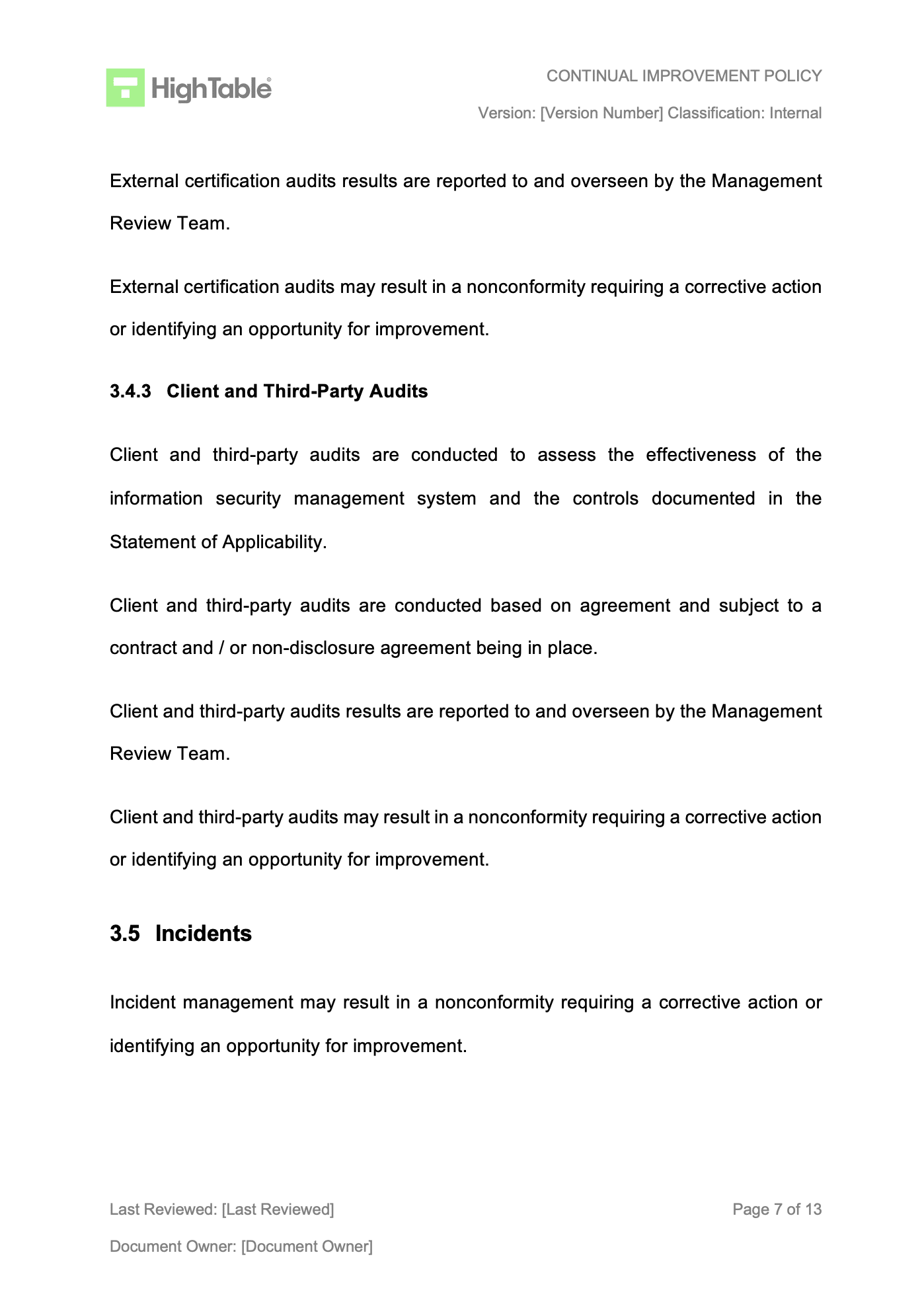
The ISO 27001 Continual Improvement Template covers: Document Version Control Document Contents Page Continual Improvement Policy Purpose Scope Principle Audit Internal Audits External Certification Audits Client and Third-Party Audits Incidents Change Management Management Review Team Review of Objectives Legal, Regulatory and Information Security Standards Change Improvement as a result of Non-Conformity Management of Improvement Policy Compliance Compliance Measurement Exceptions Non-Compliance Continual Improvement Areas of the ISO 27001 Standard Addressed
Payments are handled entirely through Stripe. They are very secure. We do not handle the payment transaction. We do not store, process or transmit your card holder data.