
ISO 27001 Business Continuity Objectives and Strategy Template
★★★★★ – Google 5-Star Reviews from Businesses Just Like You.
If you don’t know how to write a Business Continuity Strategy document or how to set business continuity objectives then this prewritten and pre-populated template is of for you.
Designed for compliance with ISO 27001 and ISO 22301 and to not only get you ISO 27001 certified but also make sure that your business continuity it on point.
Save you self some time and expensive consulting fees and download a copy of this template. It’s a pittance in the grand scheme of things.
$ 9.97
A note from the author
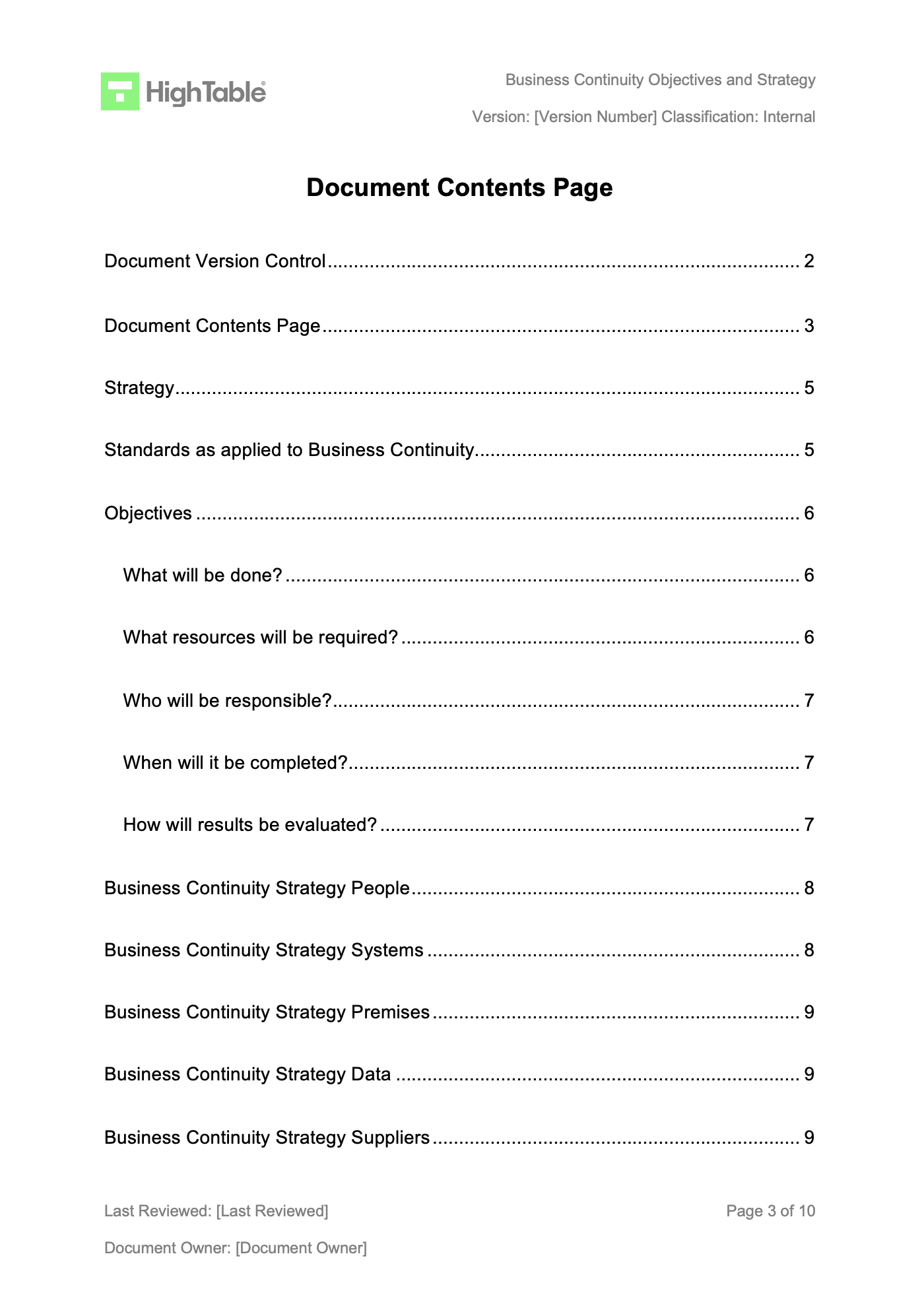
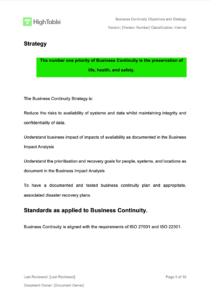
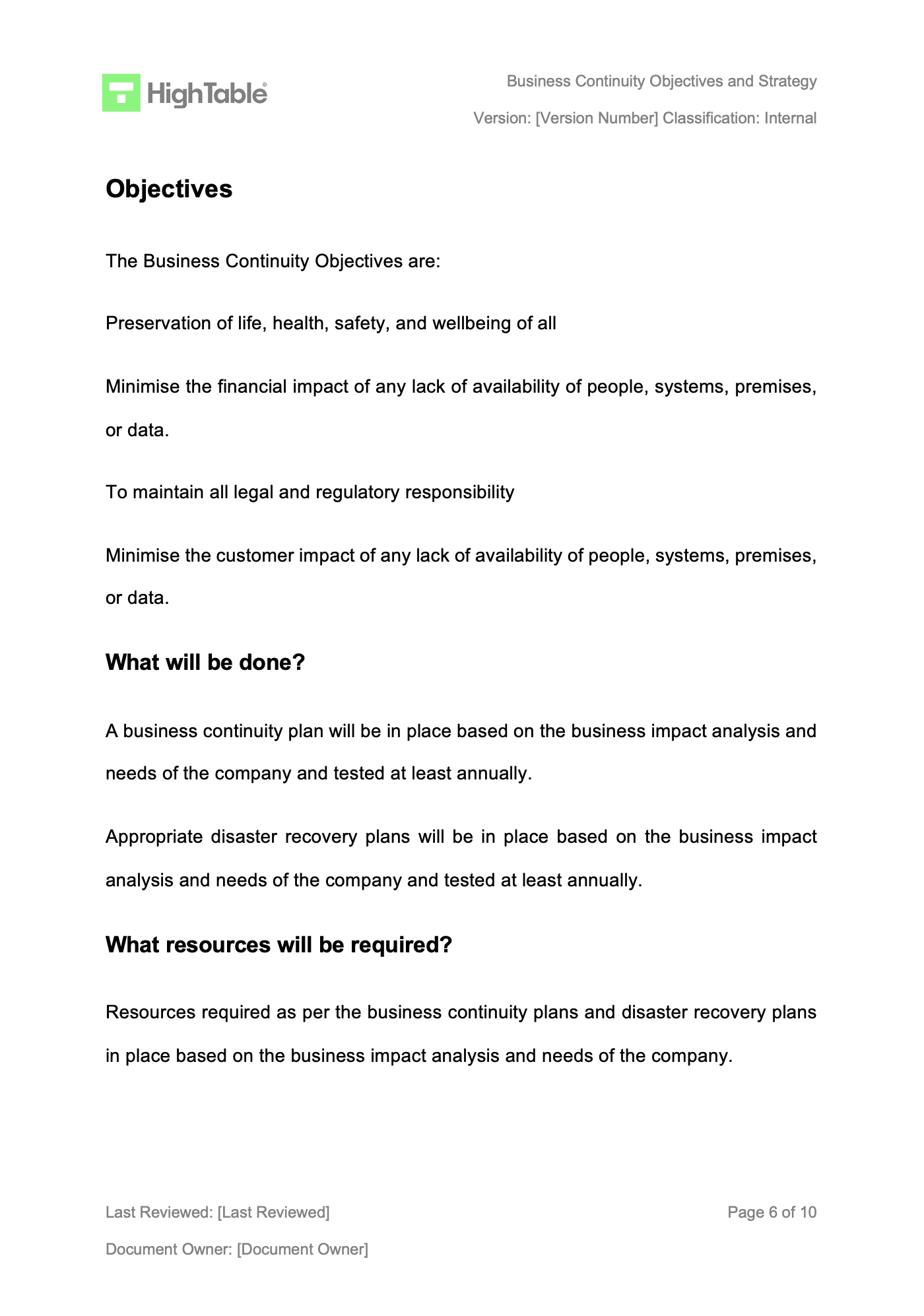
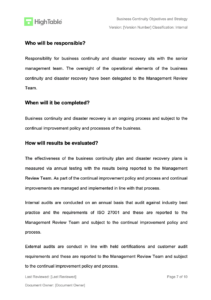
The practitioner crafted, customisable, business continuity objectives and strategy templates is a record of the business objectives and strategy. Used successfully in hundreds of businesses of all sizes globally. This is an effective Microsoft Word Templates that is fast to deploy and easy to customise. This template meets the business continuity standard ISO 22301 and is required for ISO 27001 certification. The purpose of the Business Continuity Objectives and Strategy Template is to set out the companies approach to business continuity. On what strategy is it based? What are it’s objectives? This is the first and main document that sets the scene for the companies approach to continuity. I am Stuart Barker the ISO27001 Ninja and this is the ISO27001 Business Continuity Objectives and Strategy Template
The High Table ISO 27001 Implementation Suite was architected by Stuart Barker, a veteran practitioner with over 30 years of experience in systems security and risk management.
Holding an MSc in Software and Systems Security, Stuart combines academic rigor with extensive operational experience. His background includes over a decade leading Data Governance for General Electric (GE) across Europe, as well as founding and exiting a successful cyber security consultancy.
As a qualified ISO 27001 Lead Auditor and Lead Implementer, Stuart possesses distinct insight into the specific evidence standards required by certification bodies. He has successfully guided hundreds of organizations—from high-growth technology startups to enterprise financial institutions—through the audit lifecycle.
This toolkit represents the distillation of that field experience into a standardised framework. It moves beyond theoretical compliance, providing a pragmatic, auditor-verified methodology designed to satisfy ISO/IEC 27001:2022 while minimising operational friction.


