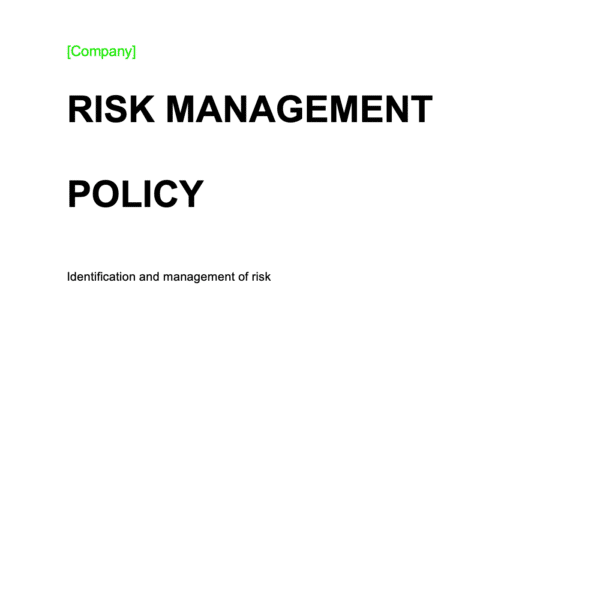
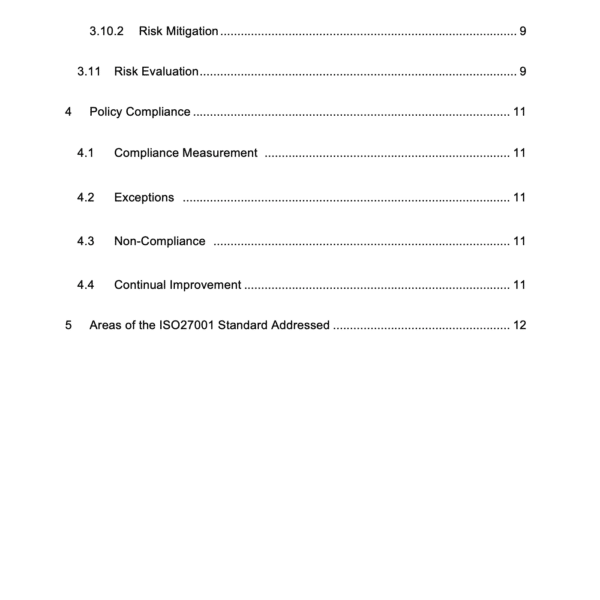
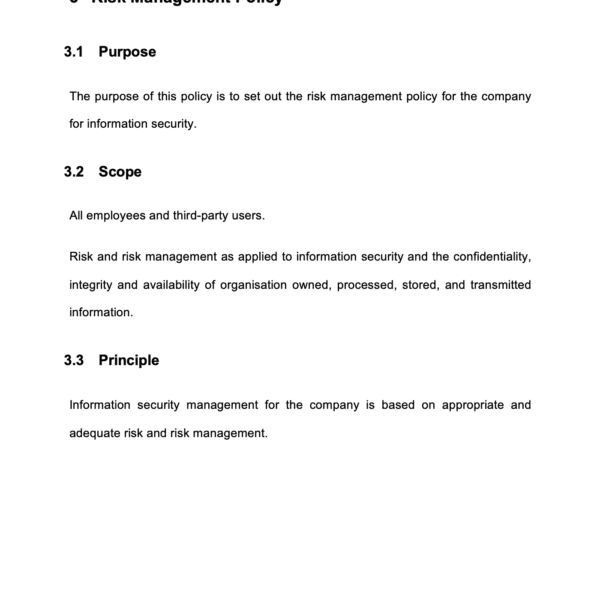
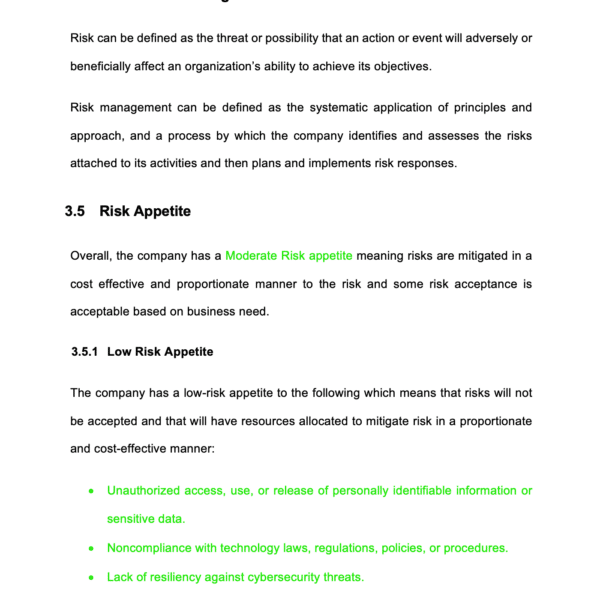
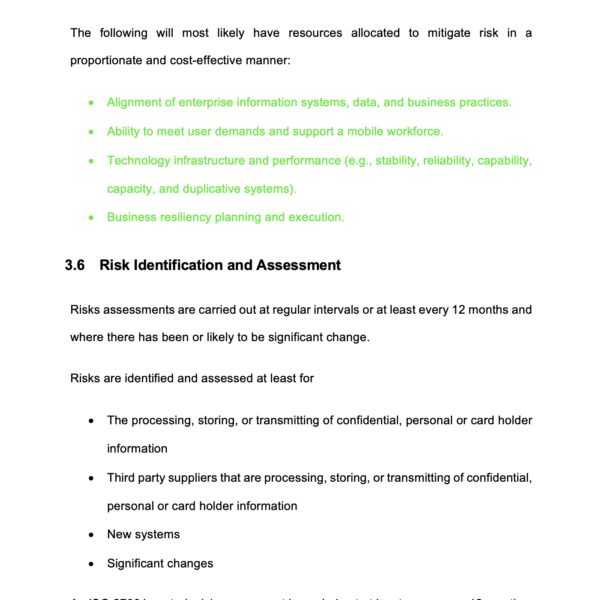
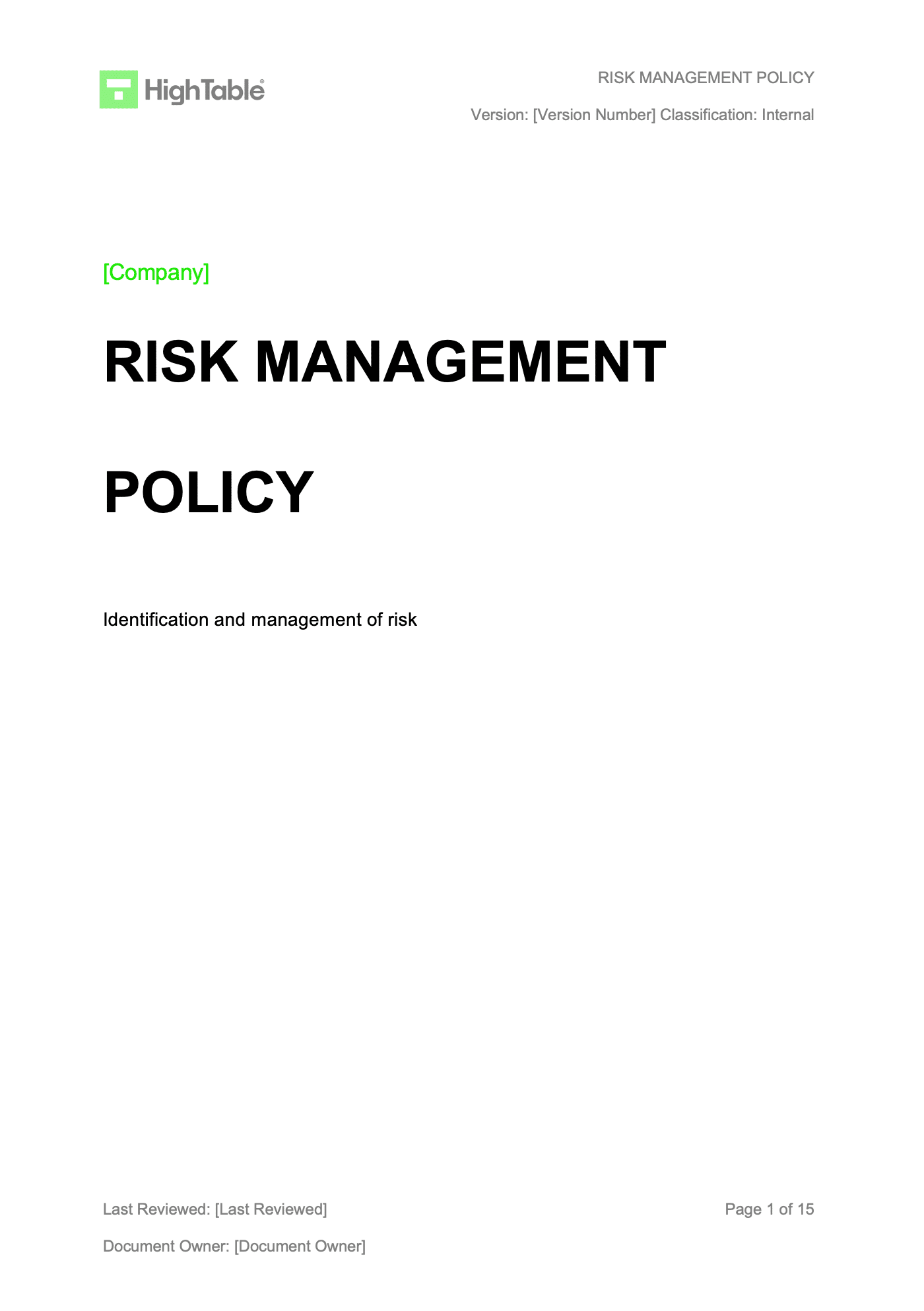
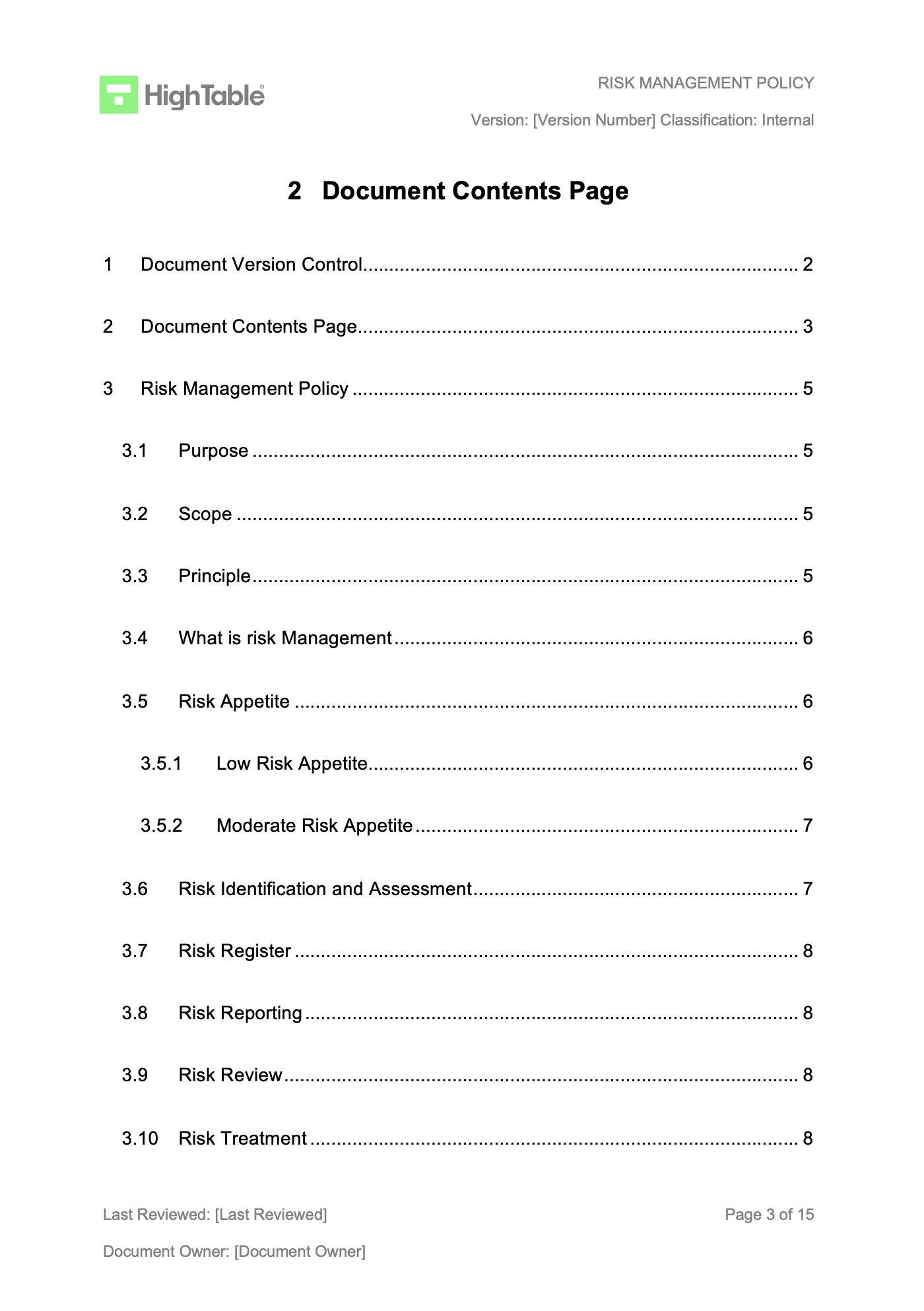
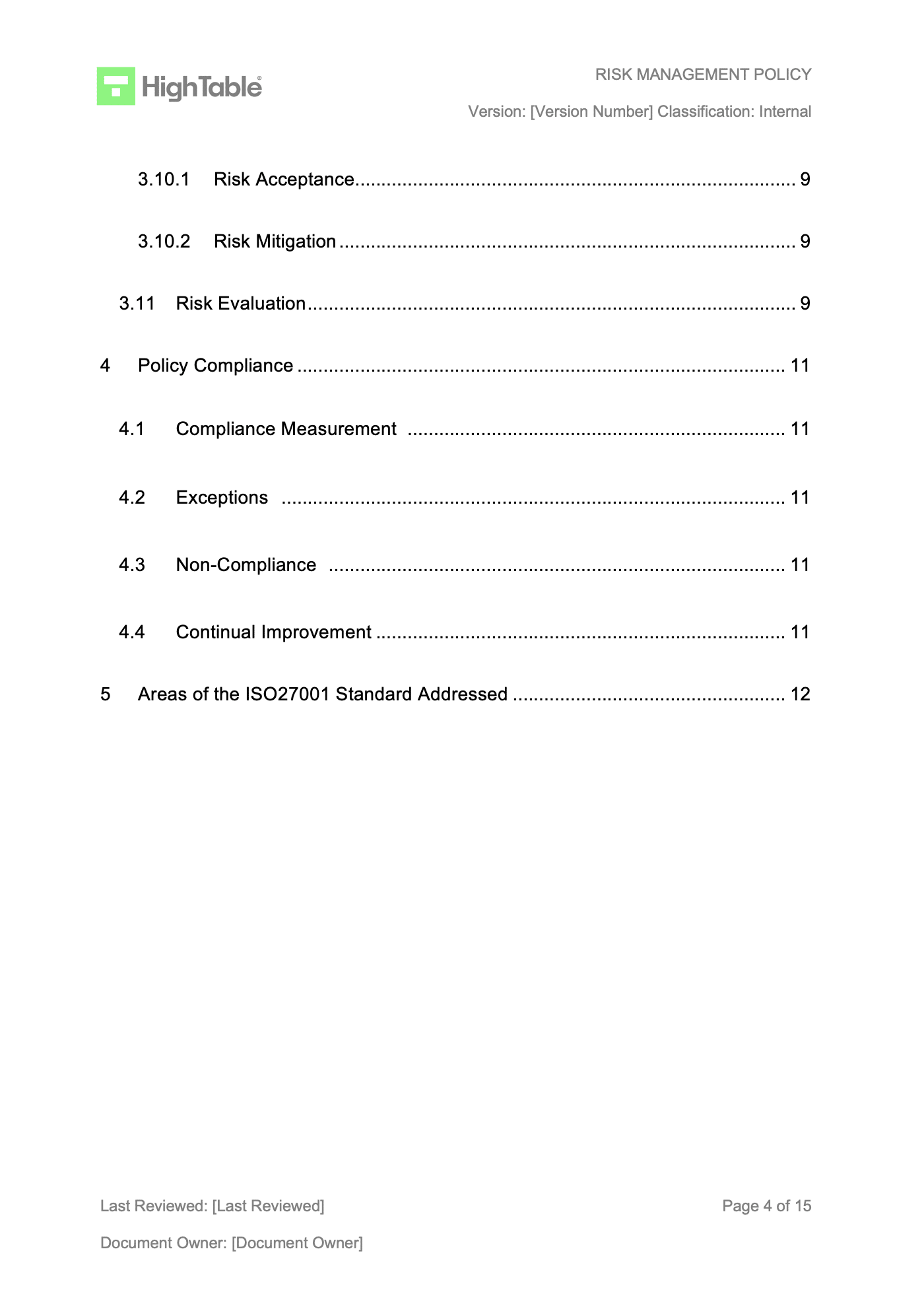
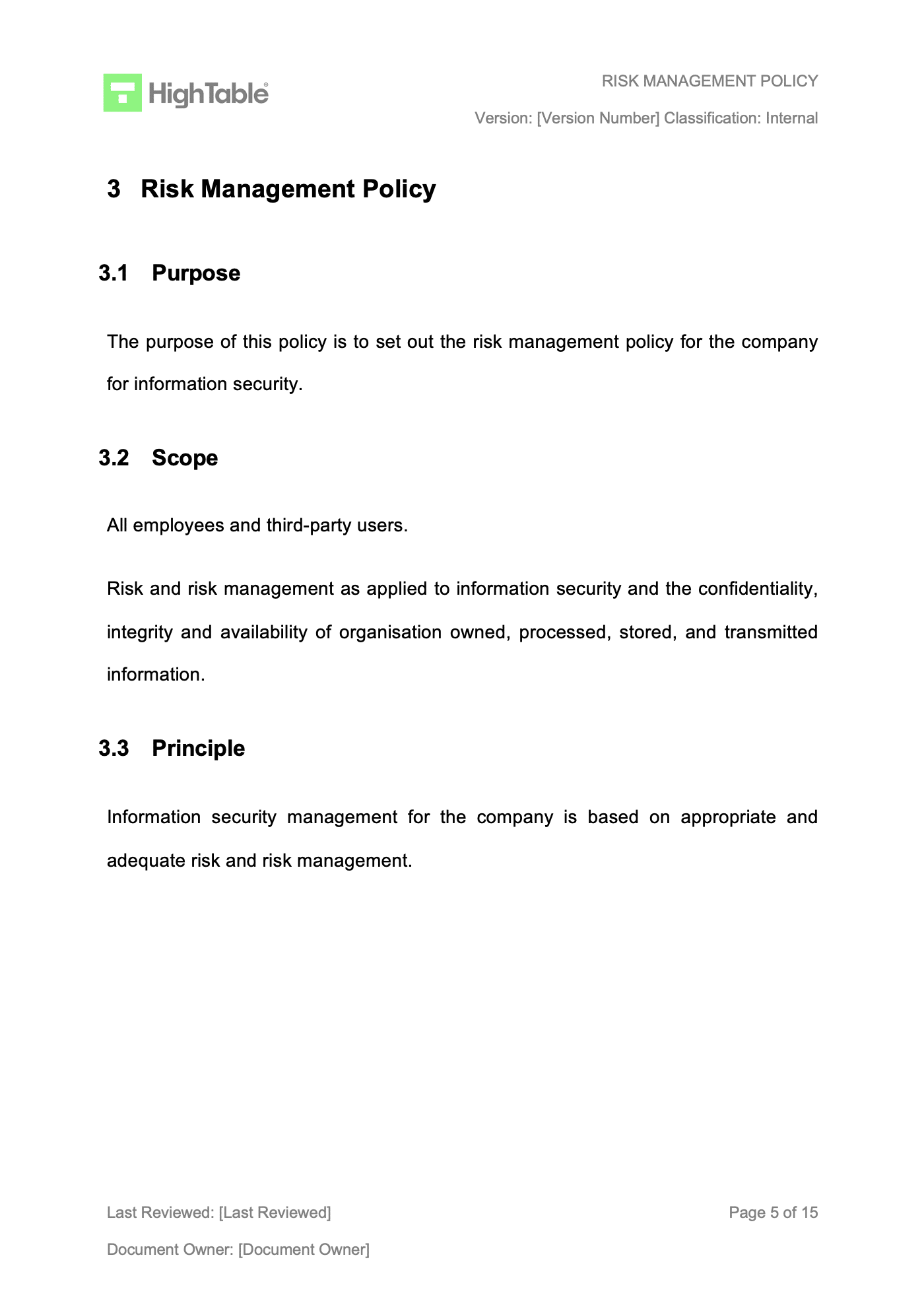
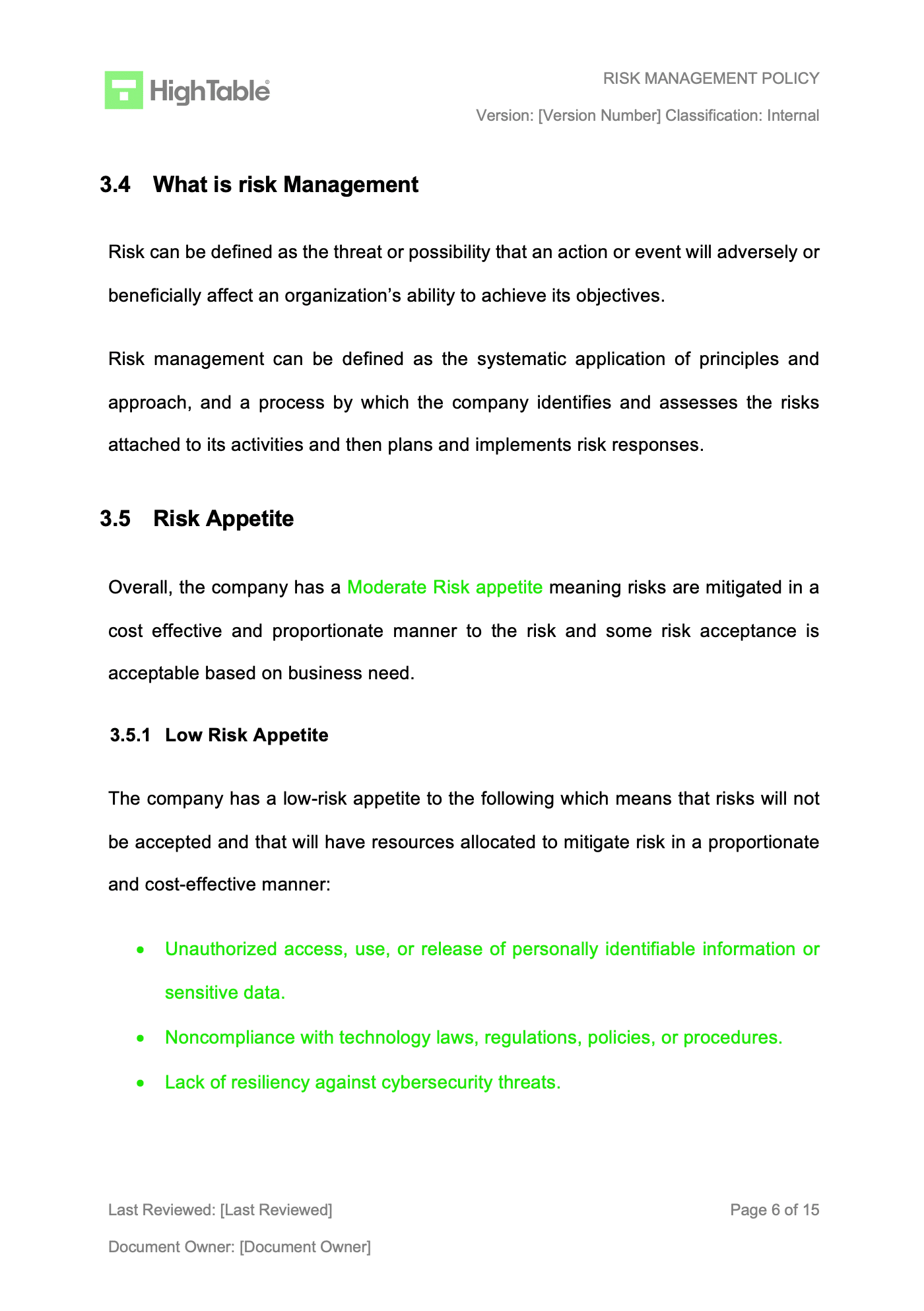
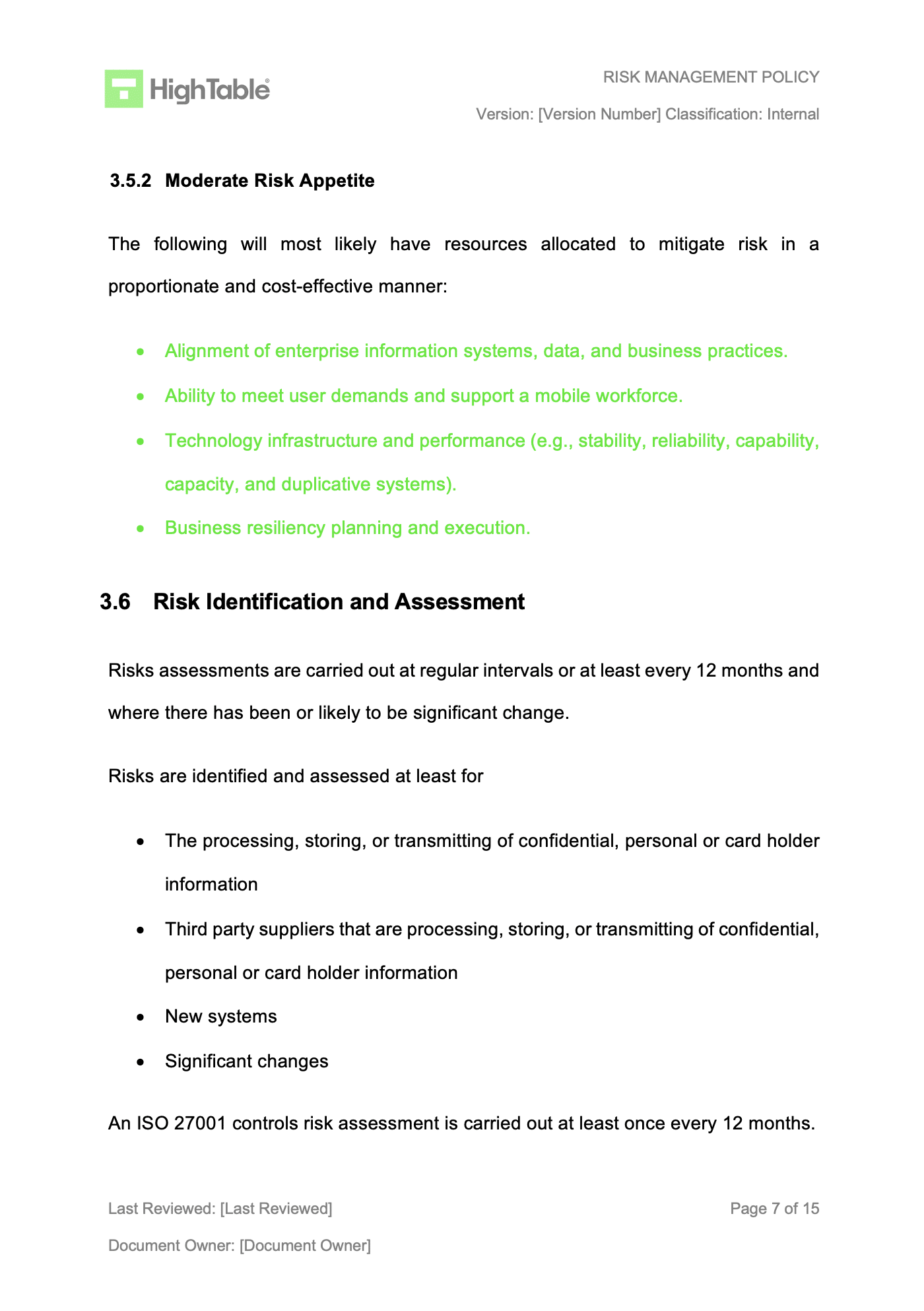
This pre-written, auditor-vetted Risk Management Policy Template provides a clear framework to identify, assess, and treat risks effectively.
Authored by ISO 27001 Lead Auditor Stuart Barker, this document is in plain English and ready to use in Microsoft Word (.docx). It is built to ensure full, auditor-ready compliance with ISO 27001:2022 (Clause 6.1.2), NIS2, and DORA.
Instant Download: Editable Microsoft Word format (.docx)
ISO 27001:2022 & DORA, NIS2 Ready: Mapped to current global standards
Fast Deployment: Simply add your logo, review the marked sections, and implement in under 1 hour
100% Human Authored: Written entirely by Stuart Barker. Not generated, edited, or polished by AI.
Auditor Verified: Crafted from years of real-world lead auditor experience, not scraped internet theory.
Certification Body Proven: Formatted to meet the strict requirements of accredited certification bodies and proven to pass audits first time.
What Is The ISO 27001 Risk Management Policy Template?
So, what exactly is this template? Think of it as a comprehensive, ready-to-use blueprint for your company’s approach to information security risk. It gives you a structured way to identify, assess, treat, and monitor all the risks to your information. This template is designed to help you meet the strict requirements of the ISO 27001 standard. It’s not just about a one-time fix; it’s about building a solid, continuous process.
Why You Need a Risk Management Policy
A single security breach can cause massive financial loss and reputation damage. A solid Risk Management Policy is your insurance policy; it gives you a structured way to find, assess, and fix threats to your data before they become incidents.
Why Start with Templates Instead of Automation?
If you are an early-stage business with under 10 people, jumping straight into automated compliance platforms (like Vanta or Drata) is often premature and expensive. Before you automate, you must first define your core processes.
Build the Foundation: Our templates help you map your real-world processes before you force them into an expensive automation tool.
Cost-Effective: You aren’t paying monthly platform fees while you are still in the early stages of building your ISMS.
No Tool Lock-in: You retain complete ownership of your documentation.
When you are ready to scale and automate, you will already have a robust, audited, and compliant foundation in place.
What is in this template?
This is a structured blueprint for managing information security risk. It covers:
Risk Methodology: How to consistently assess the severity of threats.
Risk Treatment: How to decide whether to fix, transfer, or accept a risk.
Continuous Monitoring: Keeping your risk posture up-to-date.
How to implement this policy
Assess your risks: Use the template to list threats to your assets (data, hardware, software).
Treat the risks: Decide which risks are too high and must be reduced with new security controls.
Train your team: Ensure everyone understands that security risk is everyone’s responsibility.
Review regularly: Risk management is not a “one-and-done” task. Review your risks whenever you change your technology or processes.
What Information Security Standards Require This?
This policy is a key part of ISO 27001, which is an international standard for managing information security. Other standards that need it include:
What is the ISO 27001 Risk Management Policy Template?
It is a pre-designed document that provides a structured framework for an organisation to manage information security risks in accordance with the ISO/IEC 27001 standard. It outlines the principles, processes, and responsibilities for risk identification, assessment, treatment, and monitoring.
Who should use this template?
Any organisation, regardless of size or industry, that is implementing or maintaining an Information Security Management System (ISMS) based on ISO 27001. It is particularly useful for those seeking certification.
What are the key components of the template?
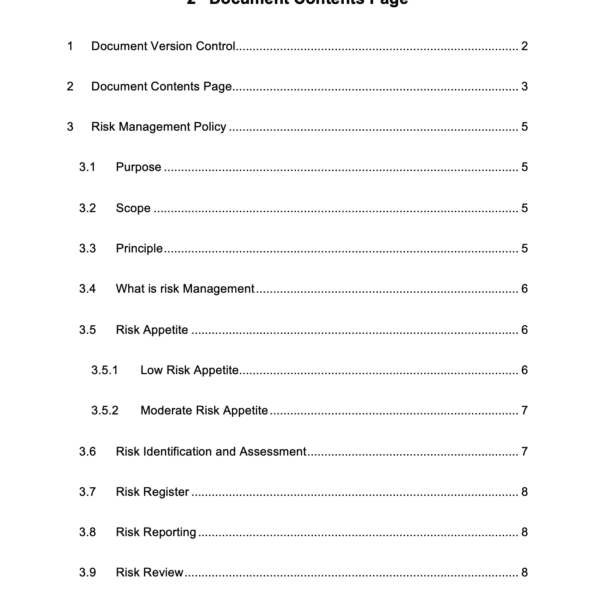
Typically, it includes sections on:
Policy statement and scope
Roles and responsibilities for risk management
Risk assessment methodology (criteria for risk acceptance, risk levels, etc.)
Links to other relevant documents (e.g., Statement of Applicability, Risk Treatment Plan)
Is this a mandatory document for ISO 27001 certification?
Yes, a documented risk management process is a core requirement of ISO 27001 (specifically clause 6.1.2). While a specific “policy” document isn’t explicitly named, having one is the most effective way to demonstrate a clear, defined, and repeatable process.
How does this template help with compliance?
It provides a clear, documented process that an auditor can review to verify that the organisation is systematically identifying, assessing, and treating its information security risks in line with the standard’s requirements. It helps avoid a disorganised or ad-hoc approach.
Can I use this template without any customisation?
No. The template is a starting point. It must be customised to reflect the specific context of your organisation, including your business objectives, risk appetite, and the specific information assets you need to protect.
What is the difference between a Risk Management Policy and a Risk Register?
The Risk Management Policy is the “how-to” guide. It defines the rules and processes for managing risks. The Risk Register is the “what” list. It is the actual record of the identified risks, their assessment, and their treatment status.
How often should the policy be reviewed?
The policy should be reviewed regularly, at least annually, and whenever there are significant changes to the organisation’s business, technology, or risk environment.
What are the benefits of using a template?
Time-saving: Reduces the effort of creating a complex document from scratch.
Consistency: Ensures all essential elements of a good risk management policy are included.
Best Practice: It is often based on the experience of experts and aligns with the standard’s requirements.
Clarity: Provides a clear, well-structured document for employees and stakeholders.
Does this template cover the entire ISO 27001 standard?
No. This template specifically addresses the risk management requirements (clauses 6.1.2 and 6.1.3). It is one of many documents required for a full ISMS, alongside policies for access control, incident management, and others.
How do I ensure the policy is effectively implemented?
Communicate the policy to all relevant employees.
Provide training on risk management principles and their roles.
Assign clear responsibilities for risk ownership.
Regularly perform risk assessments and document the results.
Use the policy as the foundation for your ongoing risk management activities.
Can this template be used for other standards like NIST or GDPR?
While the principles of risk management are similar, the template is specifically designed to meet the requirements of ISO 27001. It can be adapted, but it’s best to use a template specifically for those standards if compliance with them is the primary goal.
What is the first step after I download the template?
Read through it to understand its structure. Then, begin customising the sections with your organisation’s specific information, such as the company name, responsible roles (e.g., “CISO” or “IT Manager”), and the specific risk assessment methodology you will use.
Is a digital or physical copy of the policy required?
The standard requires the policy to be documented and available. This can be in a digital format (e.g., a PDF on an intranet or document management system) or a physical one, as long as it is controlled and accessible to those who need it.
Shopping Basket
Cookie Consent
We use cookies to improve your experience on our site. By using our site, you consent to cookies.
Cookie Preferences
Manage your cookie preferences below:
Essential cookies enable basic functions and are necessary for the proper function of the website.
Name
Description
Duration
Geolocation Config
This cookie is used to store the consent settings based on the visitor's location.
30 days
Cookie Preferences
This cookie is used to store the user's cookie consent preferences.