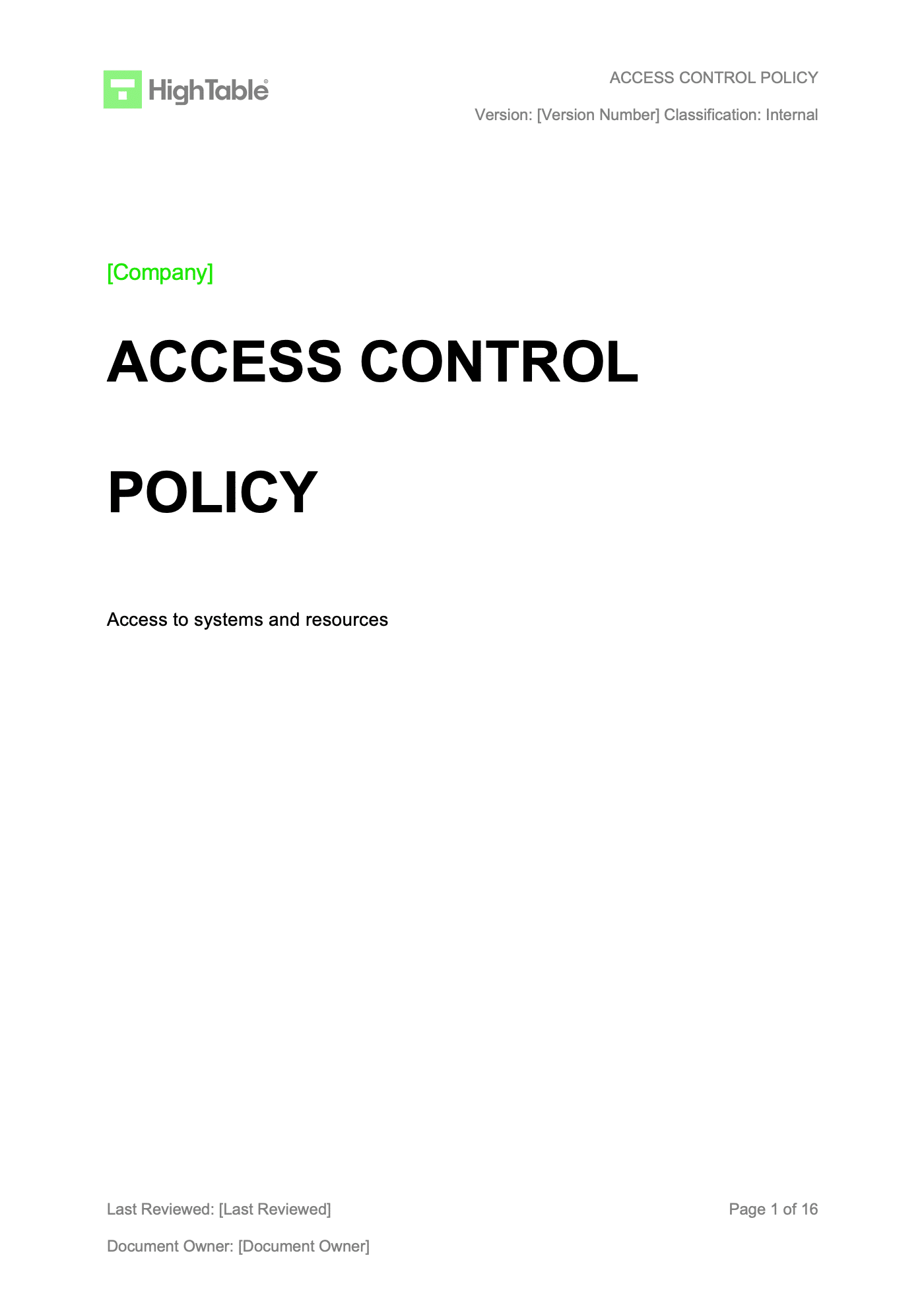
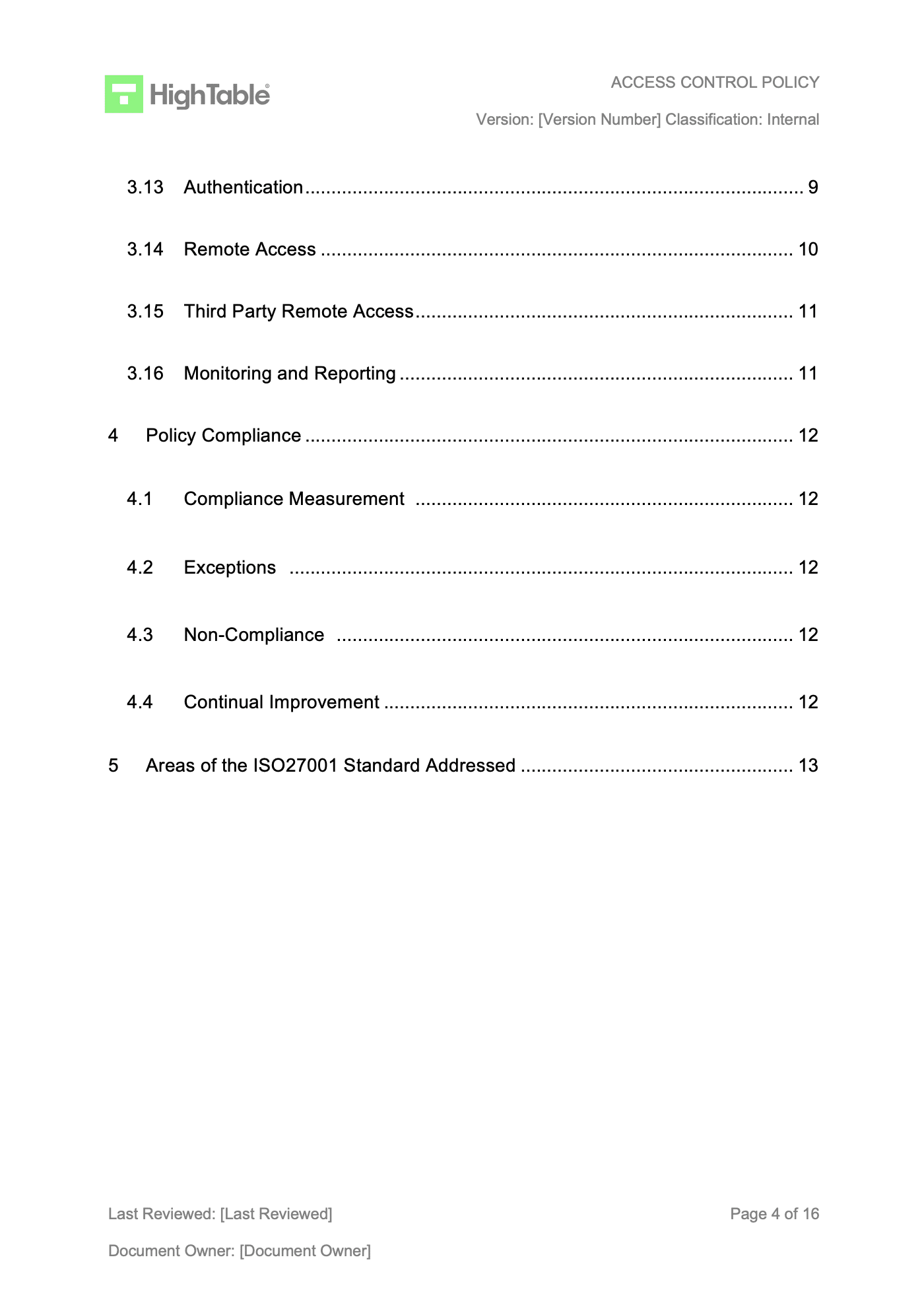
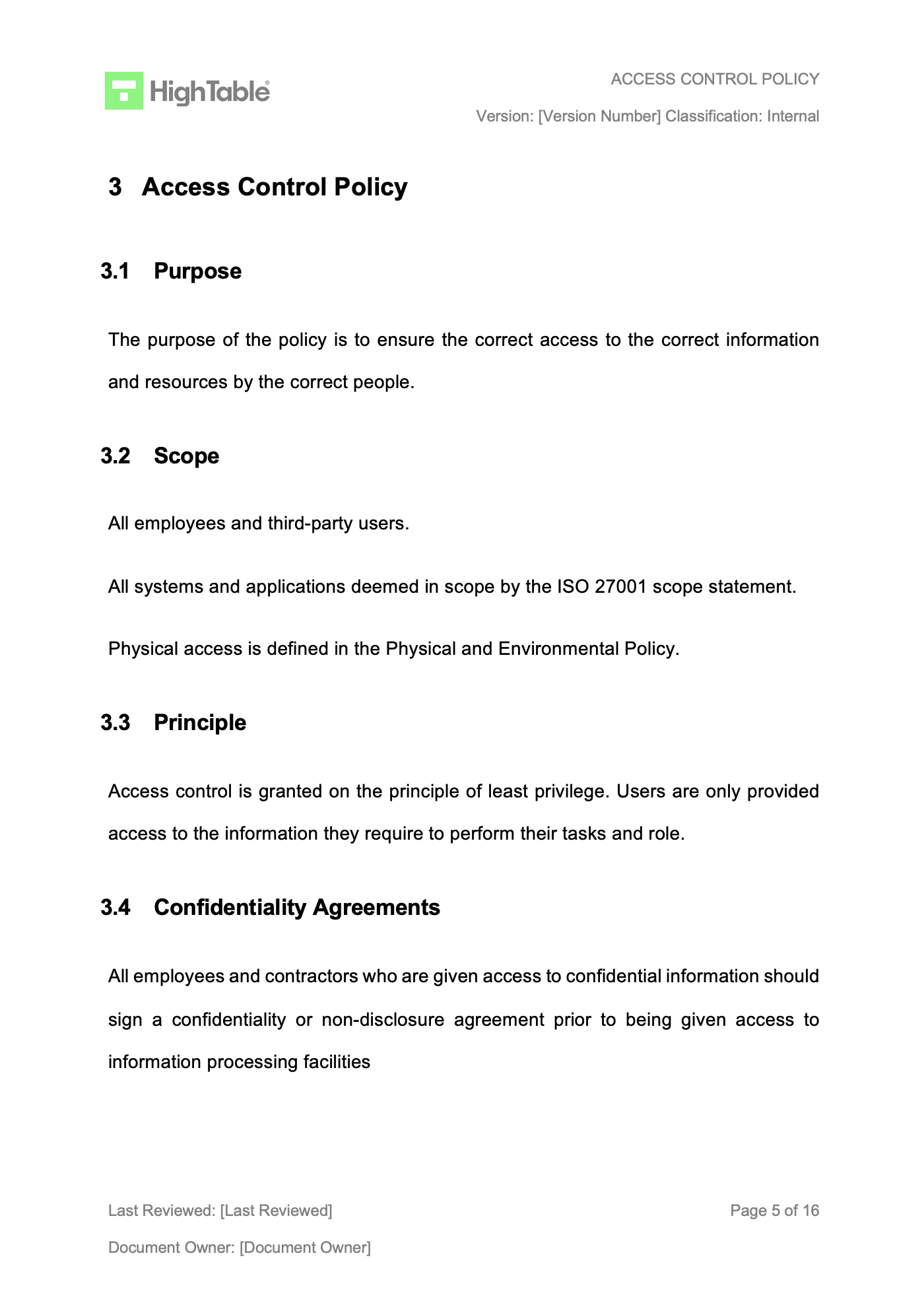
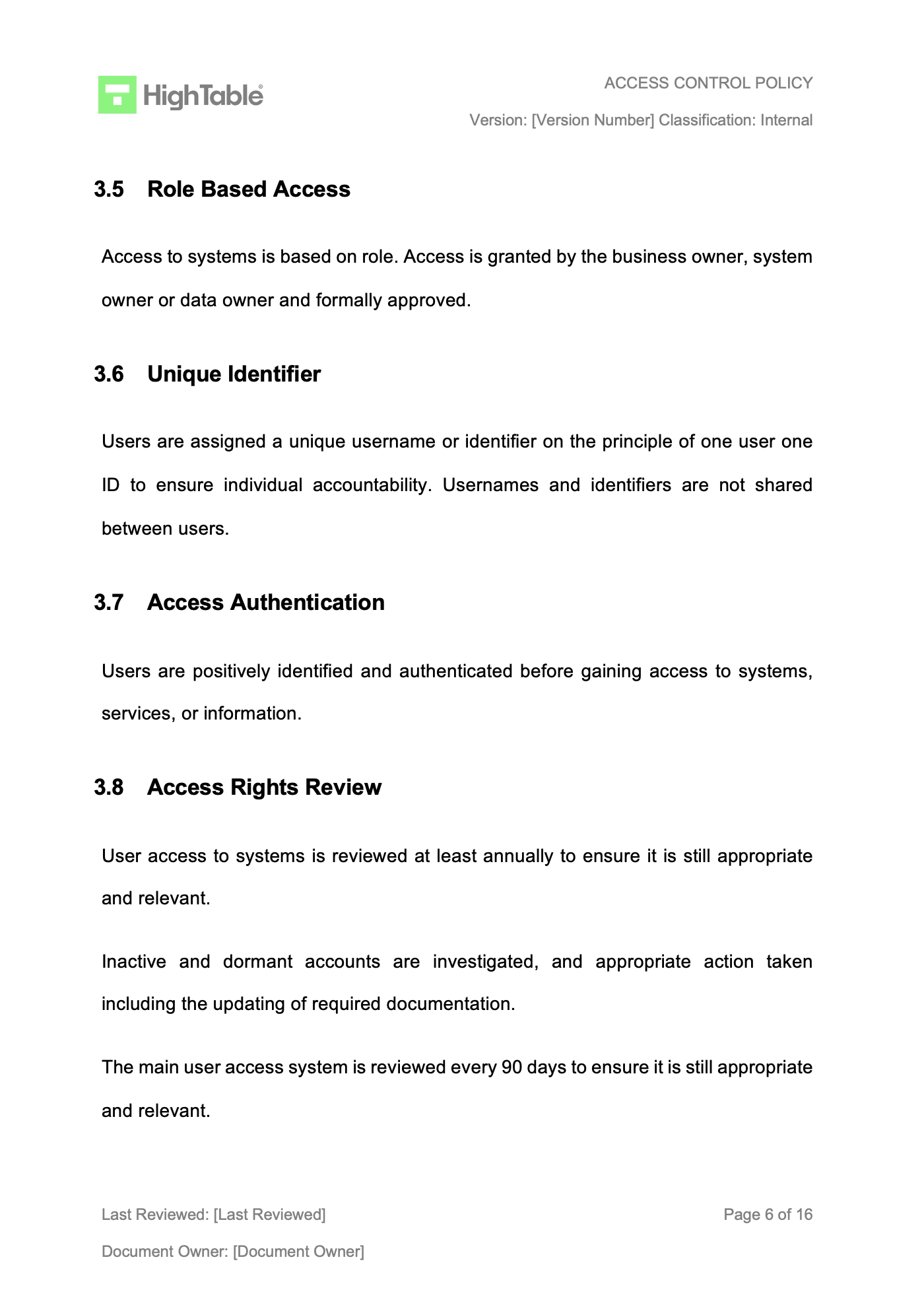
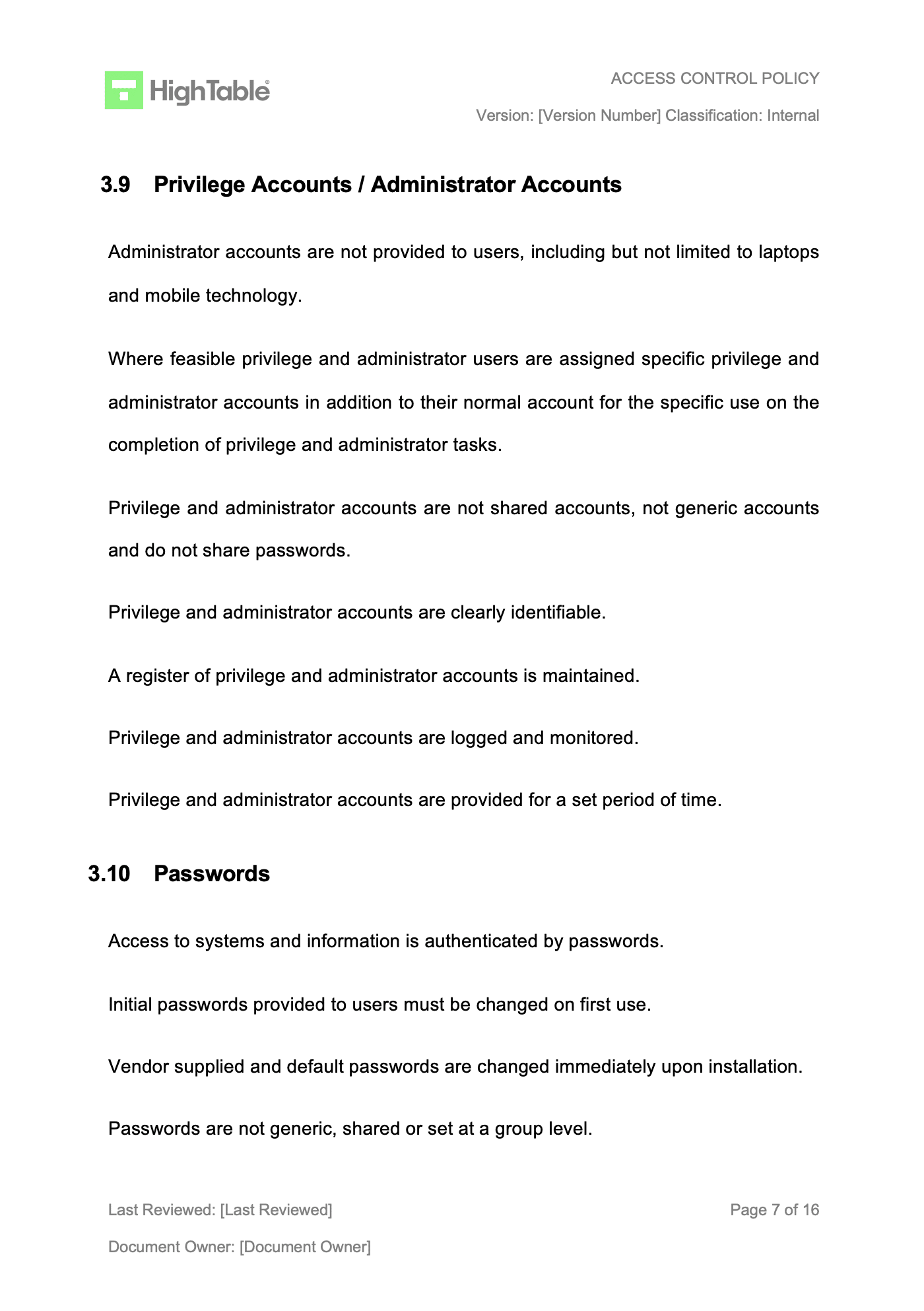
This pre-written Access Control Policy Template is designed to help you quickly define who can access your systems, data, and physical office areas.
Authored by ISO 27001 Lead Auditor Stuart Barker, this audit-ready template is provided in Microsoft Word (.docx) format. It follows the “Principle of Least Privilege,” ensuring staff have only the access they need, while meeting ISO 27001:2022, NIS2, and DORA requirements.
Instant Download: Editable Microsoft Word format (.docx)
ISO 27001:2022 & DORA, NIS2 Ready: Mapped to current global standards
Fast Deployment: Simply add your logo, review the marked sections, and implement in under 1 hour
100% Human Authored: Written entirely by Stuart Barker. Not generated, edited, or polished by AI.
Auditor Verified: Crafted from years of real-world lead auditor experience, not scraped internet theory.
Certification Body Proven: Formatted to meet the strict requirements of accredited certification bodies and proven to pass audits first time.
The ISO 27001 Access Control Policy Template is like a security blueprint for your business, helping you decide and document exactly who gets to use what resources, when, and how. Think of it as creating a set of keys and rules for every door (physical and digital) in your company. It’s an essential part of getting your Information Security Management System (ISMS) right, especially if you’re aiming for ISO 27001 certification.
Why You Need an Access Control Policy
An Access Control Policy is a security blueprint for your business. It helps you decide and document exactly who gets to use what resources, when, and how. Think of it as a set of keys and rules for every door—physical and digital—in your company.
It is essential for your Information Security Management System (ISMS) and a vital step toward ISO 27001 certification.
What is in this template?
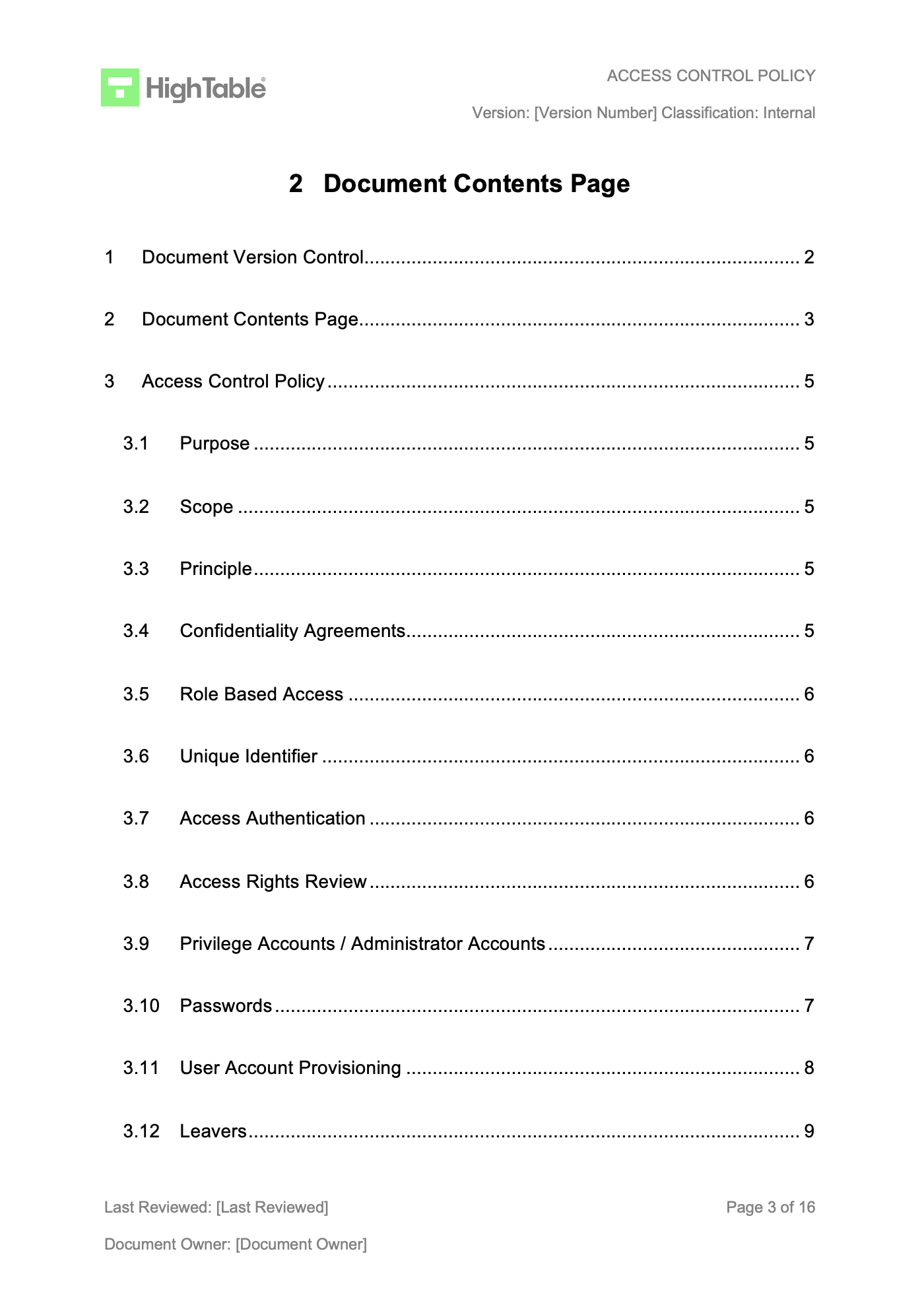
This template is a pre-written, structured document that provides the rules for managing access to your information and systems. It covers the full lifecycle of a user’s access:
Onboarding: Giving access to new employees.
Management: Changing access when an employee’s role changes.
Offboarding: Removing access immediately when an employee leaves.
We use the Principle of Least Privilege. This means users only get the bare minimum access they need to do their job. Nothing more.
Why this matters for your business
Small Businesses: Protect your customer data and financial records. This policy keeps unauthorized people from seeing sensitive files. It is your first line of defense against data breaches.
Tech Startups: Your intellectual property—source code, algorithms, and product designs—is your most valuable asset. This policy ensures only the right developers can touch your main code, protecting your competitive advantage.
AI Companies: You handle highly sensitive training data. This policy limits access, ensures data integrity, and controls who can modify your proprietary models.
Why Start with Templates Instead of Automation?
If you are an early-stage business with under 10 people, jumping straight into automated compliance platforms (like Vanta or Drata) is often premature and expensive. Before you automate, you must first define your processes.
Build the Foundation: Our templates help you map your real-world processes before you force them into an automation tool.
Cost-Effective: You aren’t paying monthly platform fees while you are still in the early stages of building your ISMS.
No Tool Lock-in: You retain complete ownership and control of your documentation.
When you are ready to scale and automate, you will already have a robust, audited, and compliant foundation in place.
Key ISO 27001 Controls
This template helps you meet several requirements of the ISO 27001:2022 standard:
Map roles to access: List every job role in your company. For each role, list only the systems they truly need to use.
Set technical controls: Use your tools (like Google Workspace, AWS, or GitHub) to apply these permissions based on your list.
Use Multi-Factor Authentication (MFA): Enforce MFA for everyone, especially for sensitive systems and administrator accounts.
Review access regularly: Every 90 days, ask department heads to review their team’s access. If an employee no longer needs certain access, remove it immediately. This prevents privilege creep.
Train your team: Teach all staff about their responsibilities, such as keeping passwords secret and not sharing accounts.
ISO 27001 Access Control Policy Template FAQ
General Questions
1. Is the Access Control Policy the same as a Password Policy? No. The Access Control Policy is the high-level ruleabout who gets what access. The Password Policy is a specific rule about how a user proves they are who they say they are (e.g., minimum password length, MFA requirement).
2. Is this template mandatory for ISO 27001 certification? Yes, it is a core document required to meet the requirements of ISO 27001:2022, specifically for The Ultimate Guide to ISO 27001:2022 Annex A 5.15 Access Control.
3. What is “Role-Based Access Control” (RBAC)? It’s a method where access permissions are tied to a role (like “Marketing Manager”) instead of an individual person. It makes managing access much simpler and consistent.
4. What is “Privilege Creep”? This is when a user accumulates more access rights over time as they move to new roles, but their old rights are never taken away. A policy with regular reviews is designed to stop this.
5. How often must the policy be reviewed? You must review the policy at least annually and whenever a major change happens in your organisation or technology.
Implementation Questions
6. What’s the best tool to enforce this policy? An Identity and Access Management (IAM) system like Okta, Azure AD, or Google Workspace is best, as it lets you manage all user accounts and permissions from one central place.
7. Should I include rules for physical access? Yes! A complete Access Control Policy should cover both logical access (systems, data) and physical access (server rooms, offices) to sensitive areas.
8. Do I need separate policies for remote access? It’s a good idea to have a specific Remote Working Policy or a clear section in your Access Control Policy that details the secure methods (like VPN and MFA) required for remote access.
9. What is the “Need-to-Know” principle? It’s the core idea of this policy: users should only be able to access the information they absolutely need to know to complete their assigned duties.
10. How do I handle access for contractors or temporary staff? Your policy should state that contractor access must be time-limited, approved by a manager, and automatically revoked on their contract end date.
Business-Specific Questions
11. As a startup, can’t I just trust my small team? Trust is great, but a policy is about process. Even honest employees make mistakes. The policy protects your company by ensuring a clear process is followed, reducing the chance of accidental data loss.
12. For our AI company, how does this policy protect our models? It dictates that your proprietary algorithms and model weights are classified as “Highly Confidential” information, thereby enforcing the strictest access controls and encryption.
13. Does this policy cover granting access to external vendors? Yes, it should have a section on Third-Party Access, requiring formal contracts, restricted permissions, and regular reviews of vendor accounts.
14. What happens if an employee violates the policy? Your policy should clearly link to your Disciplinary Policy, outlining the consequences of non-compliance (from a warning up to termination).
15. What evidence do I need to show an auditor that I’ve implemented the policy? You’ll need to show evidence like: user access review logs, a register of privileged accounts, evidence of MFA enforcement, and proof of security awareness training for staff.
Shopping Basket
Cookie Consent
We use cookies to improve your experience on our site. By using our site, you consent to cookies.
Cookie Preferences
Manage your cookie preferences below:
Essential cookies enable basic functions and are necessary for the proper function of the website.
Name
Description
Duration
Geolocation Config
This cookie is used to store the consent settings based on the visitor's location.
30 days
Cookie Preferences
This cookie is used to store the user's cookie consent preferences.