
In this guide you will learn how to implement ISO 27001 Annex A 8.32 Change Management and pass your audit from ISO 27001 Lead Auditor Stuart Barker – author of the ultimate ISO 27001 Toolkit.
ISO 27001 Annex A 8.32 Change Management is an ISO 27001 control that requires you to manage changes to both the information security management system (ISMS) and to the information processing facilities.
Table of contents
Key Takeaways
- ISO 27001 Annex A 8.32 mandates that any changes to your information processing facilities (IT systems, networks, software) or the Information Security Management System (ISMS) itself must be managed, not ad-hoc.
- Its purpose is to stop “good intentions” from causing security incidents, ensuring that every upgrade, patch, or configuration tweak is assessed for risk before it happens.
Purpose & Definition
The ISO 27001 standard defines ISO 27001 Annex A 8.32 as:
Changes to information processing facilities and information systems should be subject to change management procedures.
ISO27001:2022 Annex A 8.32 Change Management
This rule is a simple idea: You must manage changes in a safe, controlled way.
It means that whenever you plan to change something important about your IT systems, networks, or business processes, you need to check first to see if that change will hurt your security.
You need a clear plan or process that makes you stop and ask:
- What are we changing?
- Why are we changing it?
- Will this change create a new security risk?
- Who needs to say “yes” before we start?
- How will we check it works afterward?

White Label
ISO 27001 for Consultants
Custom-brandable ISO 27001 documentation for consultants. Easily rebrand, reduce project time, and deliver professional, high-value security systems. Focus on delivery, not drafting.
ISO 27001 Annex A 8.32 Requirements and Guidance
Change management can be a profession in it’s own right and this control is no substitute for that. What we are going to do is manage our changes to the information processing facilities for in-scope products and services and we are going to manage changes to the information security management system.
There are nine essential elements of a comprehensive Change Management procedure:
- Impact Assessment: Thoroughly assess and plan for the potential impact of all planned changes, considering all dependencies.
- Authorisation Controls: Implement robust authorisation controls for all proposed changes.
- Stakeholder Communication: Effectively communicate planned changes to all relevant internal and external stakeholders.
- Rigorous Testing: Establish and execute rigorous testing and acceptance testing processes for all changes.
- Implementation Strategy: Define a clear and detailed implementation strategy, including practical deployment procedures.
- Emergency and Contingency Planning: Develop and maintain comprehensive emergency and contingency plans, including a fallback procedure.
- Comprehensive Record Keeping: Maintain detailed records of all changes and related activities.
- Documentation Updates: Review and update all relevant operating documentation and user procedures to reflect the changes.
- ICT Continuity Plan Review: Review and revise all ICT continuity plans, recovery, and response procedures to accommodate the changes.
Change management guidelines
You are going to make sure that you have documented change guidelines. These can be standard guidelines or industry best practice, and you likely already do this today, just make sure that this written down, communicated and available to those that need it.
Included in your change management will be consideration for the following:
- Planning of Change
- Impact Assessment of Change
- Risk Assessment of Change
- Communication of Change
- Test and Acceptance of Change
- Deployment Plans for Changes
- Back out/ rollback Procedures for failed changes
- Records of Change
- Updated Documentation as a result of change
- Updated Business Continuity and Disaster Recovery as a result of change
For change management you need documented roles, responsibilities, processes and procedures.
Change management is not overly complex although it can be a documentation overhead. Be sure to document everything and have evidence of past changes for the auditor to review.
Change Management Policy Template
It can be confusing to work out what to include in a change management policy or where to start. An ISO 27001 Policy Template that is pre written and ready to go can save you a lot of heart ache so that is why we have done the heavy lifting with the ISO 27001:2022 Change Management Policy Template.
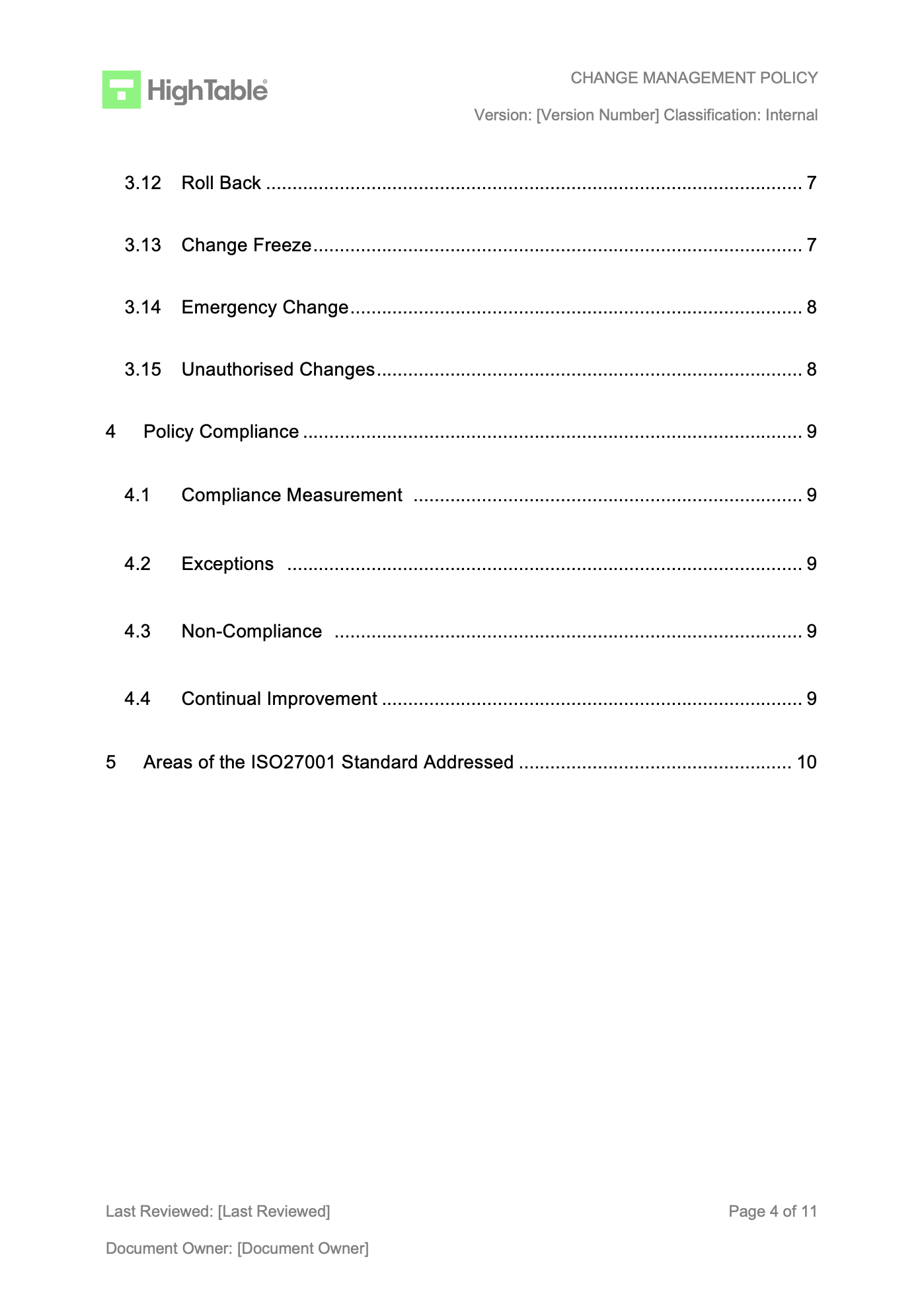
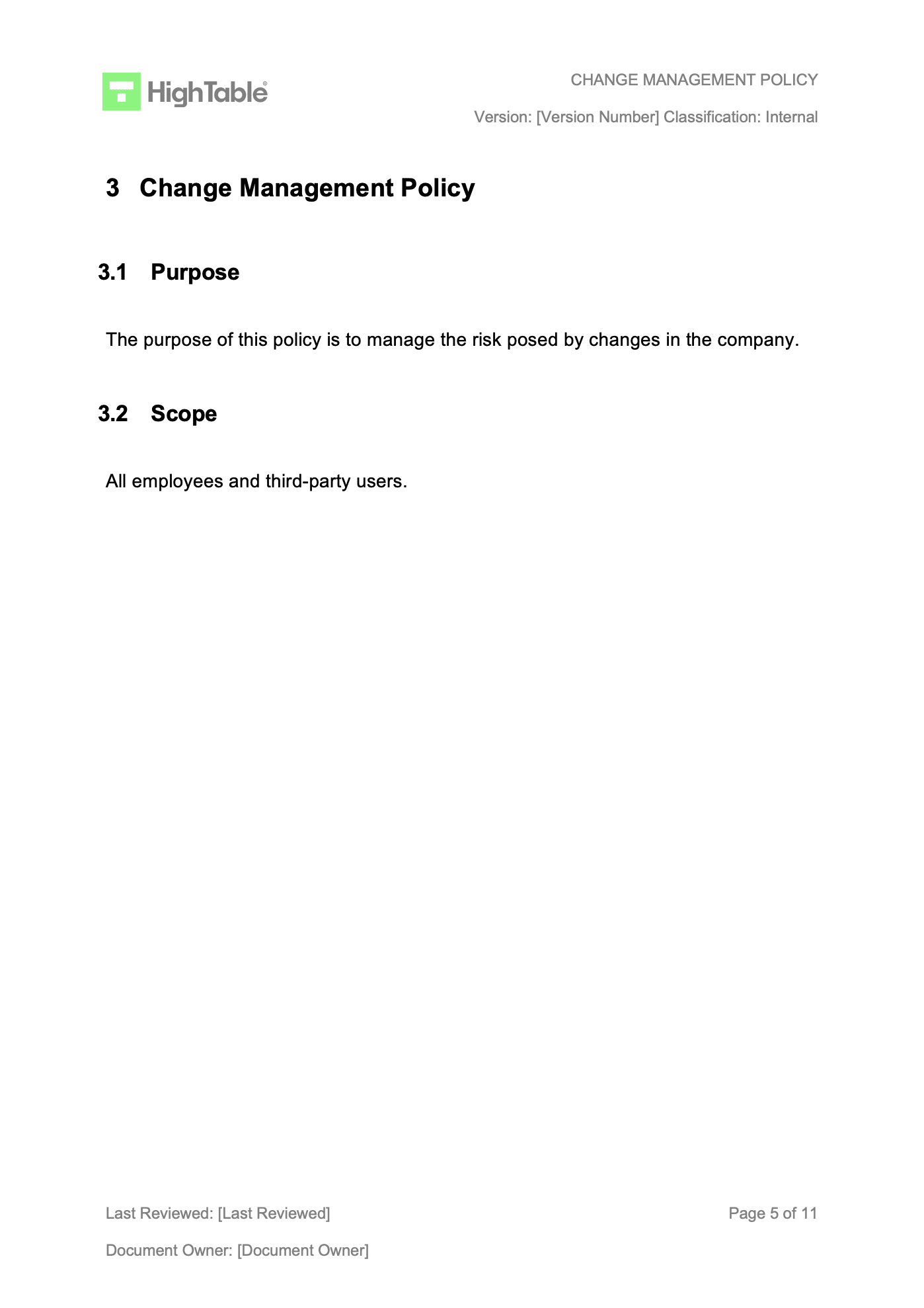
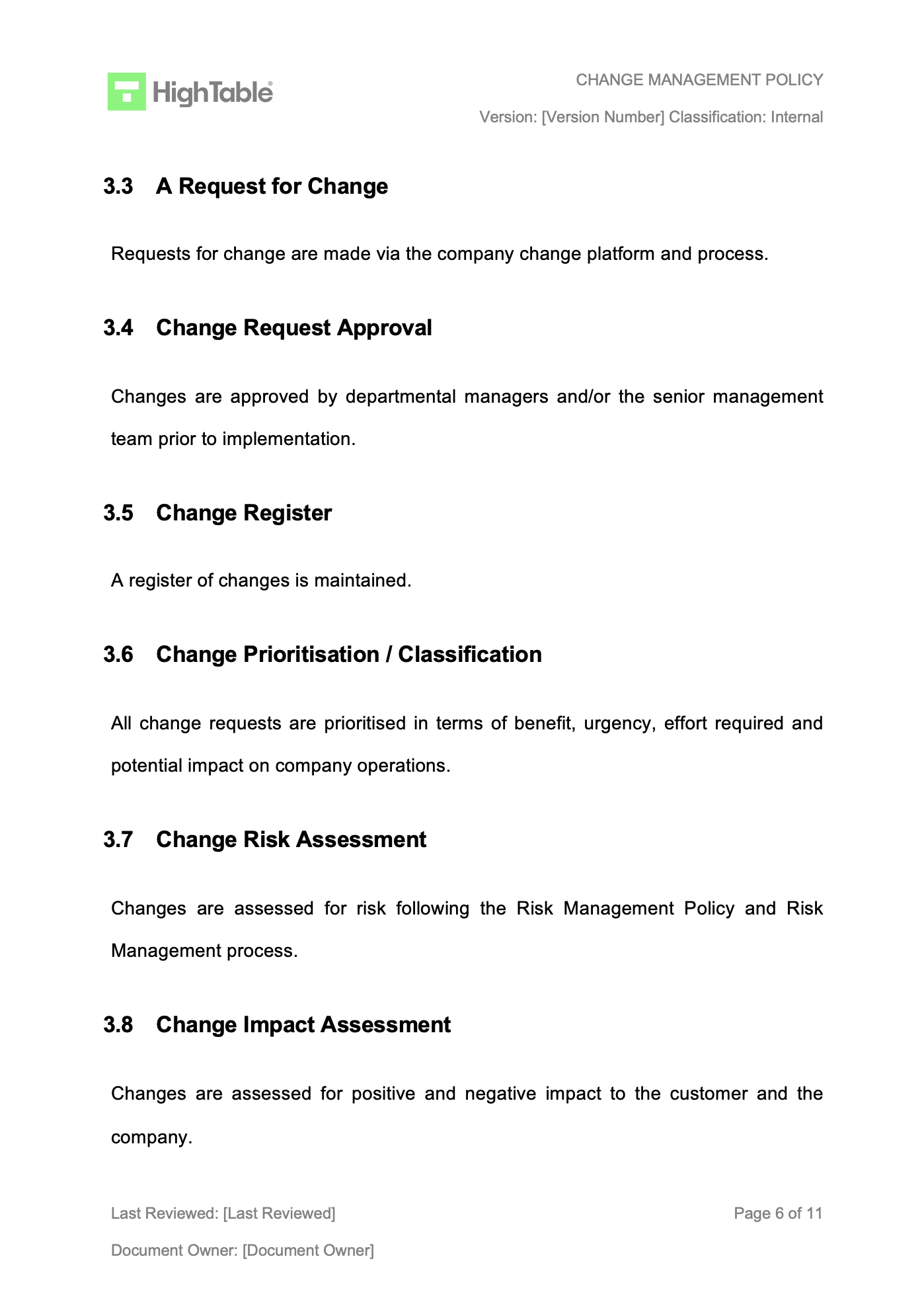
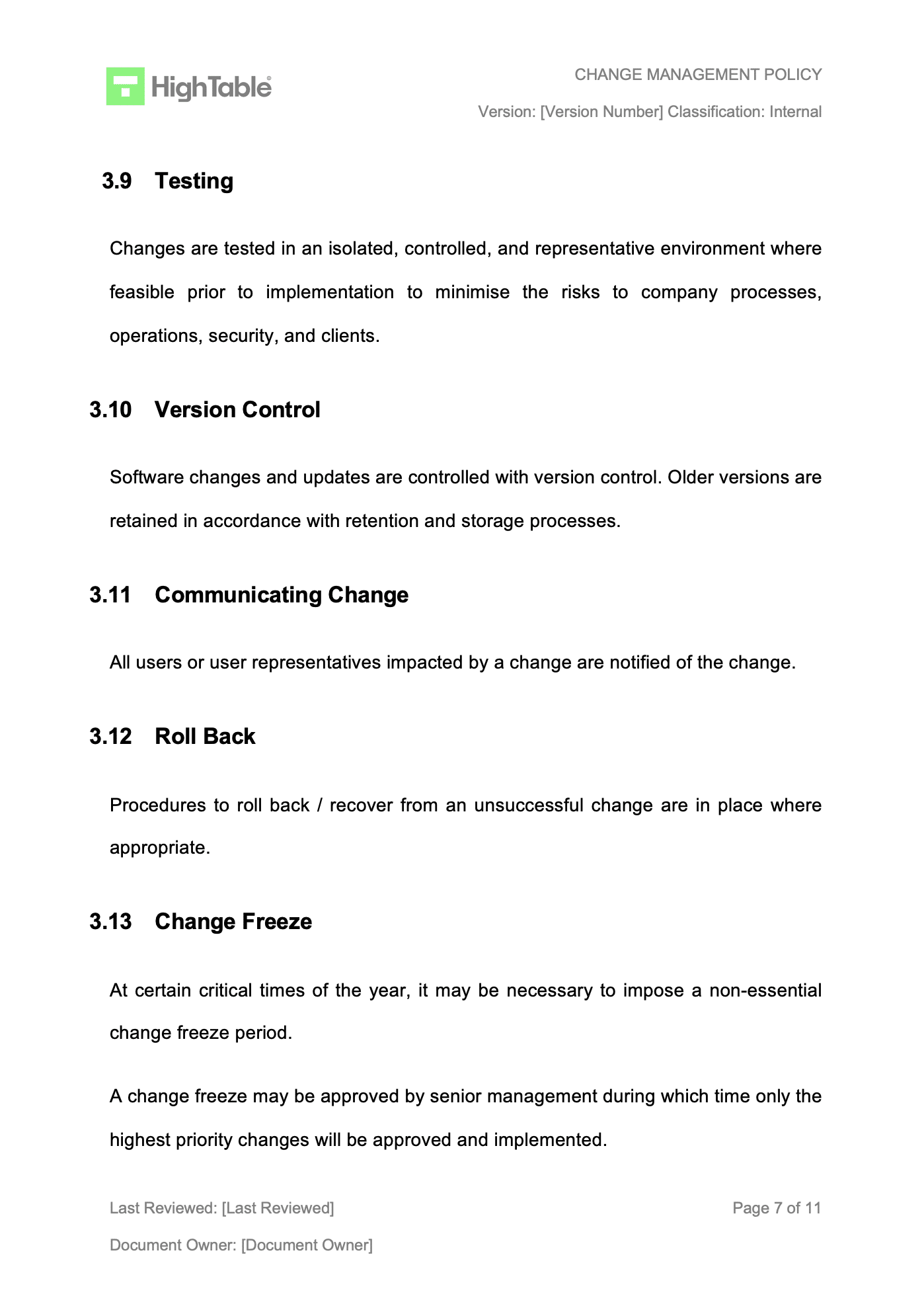
ISO 27001 Change Management Policy Example
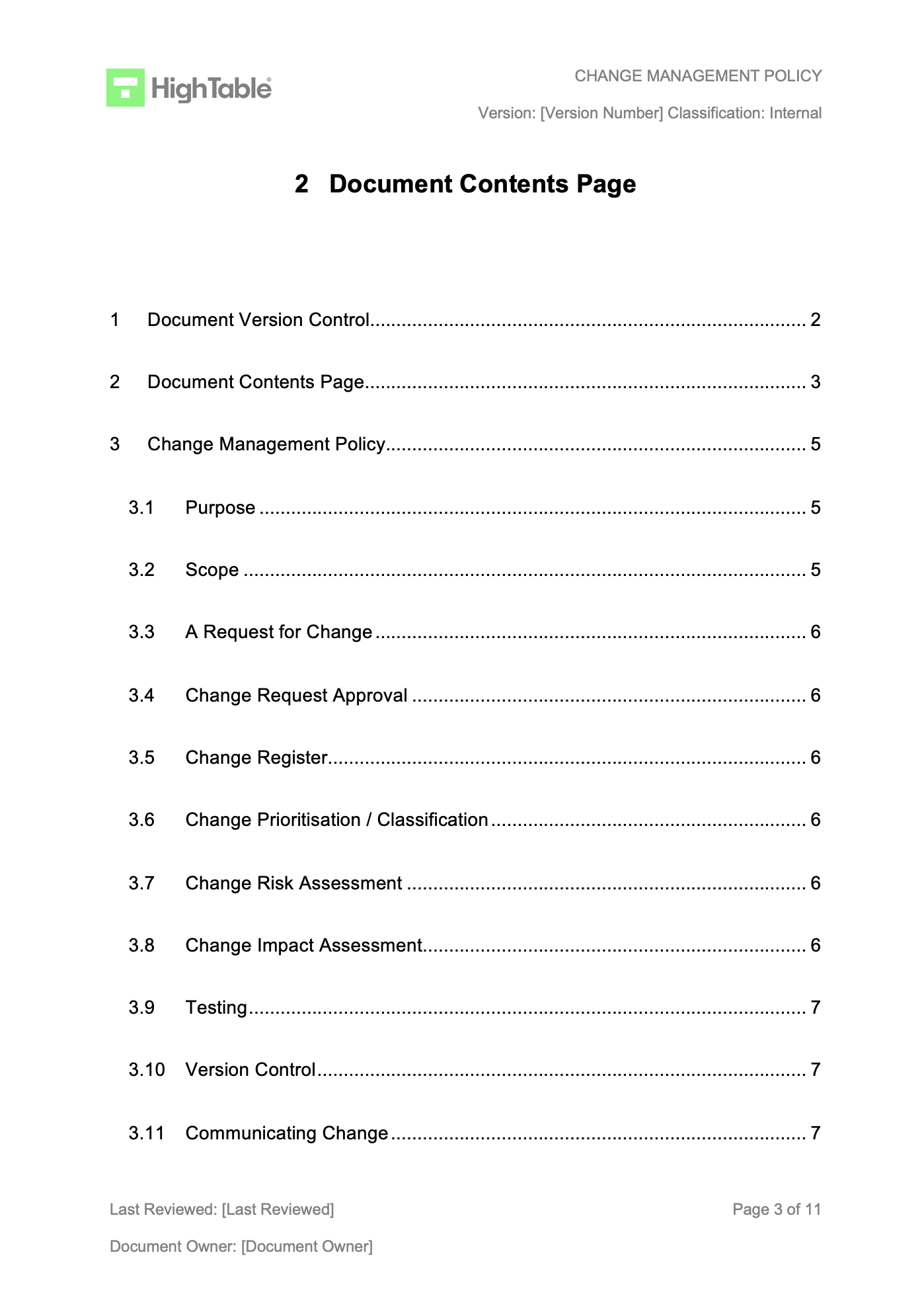
The following is an example change management policy for ISO 27001.
How to implement ISO 27001 Annex A 8.32
In this step by step implementation checklist to ISO 27001 Change Management I show you, based on real world experience and best practice, the best way to implement Annex A 8.32.
1. Formalize the Change Management Policy and Scope
Define the governance framework for what constitutes a “change” versus “business as usual” maintenance to prevent unauthorized modifications.
- Define criteria for Standard, Normal, and Emergency changes.
- Appoint a Change Advisory Board (CAB) with cross-functional representation.
- Document a clear “Definition of Ready” for production deployments.
2. Establish a Centralized Request for Change (RFC) Workflow
Provision a technical system of record to capture all modification requests, ensuring a complete audit trail for external compliance audits.
- Implement a ticketing system (e.g., Jira Service Management or ServiceNow) to track RFC status.
- Mandate technical descriptions, business justification, and primary stakeholders for every request.
- Assign unique identifiers to every change to link commits in version control to specific RFCs.
3. Conduct Technical Impact and Security Risk Assessments
Analyze the potential security degradation resulting from a change by evaluating dependencies and vulnerability surfaces.
- Perform automated dependency scanning and SAST/DAST testing for software changes.
- Evaluate the impact on existing IAM roles and network segmentation (VLANs/Firewall rules).
- Execute a formal risk assessment for high-impact changes to identify potential availability or confidentiality breaches.
4. Execute Testing, Validation, and Quality Assurance
Validate the technical integrity of the change in a segregated staging environment that mirrors production configurations.
- Execute User Acceptance Testing (UAT) and document sign-offs from system owners.
- Run regression testing to ensure existing security controls remain effective post-implementation.
- Verify that audit logging remains active and correctly formatted during the testing phase.
5. Authorize and Deploy with Rollback Protocols
Transition changes to production using Principle of Least Privilege (PoLP) and a verified “back-out” strategy.
- Formalize a “Point of No Return” and document detailed rollback procedures for failed deployments.
- Provision temporary elevated access (Just-In-Time access) for engineers performing the deployment.
- Schedule deployments during low-impact windows and communicate the maintenance window to stakeholders.
6. Perform Post-Implementation Review (PIR) and Logging
Finalize the change lifecycle by verifying successful implementation and closing the feedback loop for continuous improvement.
- Analyze system logs and performance metrics to confirm the change achieved the intended result.
- Conduct a Post-Implementation Review (PIR) for any change that resulted in an incident or required a rollback.
- Update configuration management databases (CMDB) and technical documentation to reflect the new state.
Check Your Work?
You built it yourself. Maybe with AI. But will it pass the audit?
Don’t gamble – let an ISO 27001 Lead Auditor check your work.
How to audit ISO 27001 Annex A 8.32
To conduct an internal audit of ISO 27001 Annex A 8.32 Change Management use the following audit checklist which sets out what to audit and how to audit it.
Effective change management is critical for maintaining the integrity of an ISO 27001 compliant Information Security Management System (ISMS). This guide provides a detailed checklist for auditors to evaluate the effectiveness and maturity of change controls.
1. Verify the Change Management Process Documentation
A compliant ISMS must have a clearly defined framework for managing change. Confirm the existence of documented procedures and standardized forms.
- Is there a documented ISO 27001 change management policy?
- Are roles and responsibilities (e.g., Change Advisory Board) clearly defined?
- Do current practices match the documented procedures during a walkthrough?
Professional Implementation Note
Auditors should look for a “Change Management Matrix” that defines what constitutes a ‘Major’, ‘Minor’, or ‘Emergency’ change, as each requires different levels of scrutiny.
2. Gather Substantive Evidence of Changes
Verify that the process is actively used and not just “shelf-ware.” Identify recent changes through various ISMS inputs.
- Review internal audit logs and management review minutes for change inclusions.
- Seek evidence that changes were identified through regular risk assessments.
- Cross-reference technical logs with the official Change Log.
Professional Implementation Note
Use “Sampling” to pick 3-5 changes from the last six months. Don’t let the auditee choose the samples for you; pull them directly from the ticketing system or Git logs.
3. Assess the Rigor of Impact Assessments
Every change must be evaluated for its potential impact on information security. This is a core requirement of Annex A 8.32.
- Review the risk assessment methodology specifically used for change.
- Ensure relevant stakeholders (Security, IT, and Business Owners) are involved in the process.
Professional Implementation Note
A high-quality impact assessment should include a “Back-out” or “Roll-back” strategy. If a change fails, the organization must be able to restore the previous secure state immediately.
4. Check for Formal Authorisations
Unauthorized changes represent a significant breakdown in controls. Audit the approval trail for consistency.
- Walkthrough approval workflows within your management system (e.g., Jira, ServiceNow).
- Confirm that delegation of authority is at the appropriate seniority level.
Professional Implementation Note
Check the date/time stamps of approvals. Approvals that occur after the change was implemented are a major non-conformity.
5. Audit the Implementation and Technical Testing
Implementation must be proven through technical evidence of testing. A simple “it works” statement is insufficient.
- Review evidence of unit testing, integration testing, and security testing.
- Verify User Acceptance Testing (UAT) sign-off before production deployment.
Professional Implementation Note
Security testing should include vulnerability scans for any infrastructure changes or static code analysis for application changes.
6. Review Communication to Stakeholders
Changes often fail because those affected weren’t informed. Review the communication plan for high-impact changes.
- Check for evidence of regular updates and training sessions.
- Review meeting minutes (Change Advisory Board or Risk Reviews) for inclusion of change notifications.
- Review the communication plan and evidence of regular updates and training.
Professional Implementation Note
Effective communication includes notifying the Service Desk. If users call with issues after a change, the help desk must know exactly what was modified.
7. Audit Post-Implementation Reviews (PIR)
The “Monitor and Review” phase confirms that the change achieved its objectives without introducing new risks.
- Examine PIR reports for major changes to identify areas for improvement.
- Verify the success criteria applied to changes were actually measured.
Professional Implementation Note
A PIR shouldn’t just be a tick-box. It should specifically address whether the change caused any unexpected security incidents.
8. Review Documented Changes to the ISMS
Ensure that the documentation itself (e.g., Network Diagrams, Asset Registers) was updated to reflect the new state.
- Assess documentation for changes and the subsequent version control of those documents.
Professional Implementation Note
Often, the system is changed but the “Statement of Applicability” or “Asset Register” is forgotten. This discrepancy is a common audit finding.
9. Evaluate Integration with Key ISMS Processes
Change management does not exist in a vacuum. It must be integrated with other processes like Incident and Problem Management.
- Assess if changes are triggered by problem management or risk treatment plans.
- Check for consistency and efficiency in how data flows between these processes.
Professional Implementation Note
The Auditor should check the “Emergency Change” process specifically for its integration with Incident Management—this is where security risks are highest.
10. Assess Continual Improvement of the Process
Finally, verify that the Change Management process itself is being regularly evaluated for effectiveness.
- Seek evidence of regular reviews and evaluations of the change management framework.
- Verify that necessary adjustments were implemented to address identified weaknesses.
Professional Implementation Note
Look for “Change Success Rate” KPIs. A declining success rate should trigger a formal review within the Continual Improvement program.
ISO 27001 Toolkit
Everything a business needs to do ISO 27001 and get ISO 27001 certified in the ISO 27001 Toolkit: Business Edition
List of relevant ISO 27001:2022 controls
The ISO 27001:2022 standard has specific controls that relate to change management:
- ISO 27001:2022 Annex A 8.29 Security Testing in Development and Acceptance
- ISO 27001:2022 Annex A 5.25 Assessment And Decision On Information Security Events
- ISO 27001: Annex A 8.34 Protection of Information Systems During Audit Testing
ISO 27002:2022 Control 8.32
ISO 27002 Control 8.32 provides implementation guidance for Change Management.
Further Reading
ISO 27001 Change Management Policy Beginner’s Guide
ISO 27001 Annex A 8.32 Attributes Table
| Control type | Information security properties | Cybersecurity concepts | Operational capabilities | Security domains |
|---|---|---|---|---|
| Preventive | Confidentiality | Protect | Information Protection | Protection |
| Integrity | Application Security | |||
| Availability | System and Network Security |
About the author
