
In this guide you will learn how to implement ISO 27001 Annex A 8.18 Use of Privileged Utility Programs and pass your audit from ISO 27001 Lead Auditor Stuart Barker – author of the ultimate ISO 27001 Toolkit.
ISO 27001 Annex A 8.18 Use of Privileged Utility Programs is an ISO 27001 control that requires us to control the use of utility programs which are capable of overriding system and application controls.
Table of contents
Key Takeaways
- ISO 27001 Annex A 8.18 requires organisations to tightly control and restrict the use of “utility programs”, tools that are capable of overriding system and application security controls.
- Because these programs (like database editors or network sniffers) can bypass normal security “walls,” they must only be used by authorised experts for specific, documented tasks.
Examples of utility programs can include:
- Antivirus Software
- Malware Protection Tools
- Patching Tools
- Backup Software
- Coding Tools
- Network Management and Monitoring Tools
Purpose & Definition
ISO 27001 Annex A 8.18 is a preventive control to ensure the use of utility programs does not harm system and application controls for information security.
The ISO 27001 standard defines ISO 27001 Annex A 8.18 as:
The use of utility programs that can be capable of overriding system and application controls should be restricted and tightly controlled
ISO27001:2022 Annex A 8.18 Use of Privileged Utility Programs

White Label
ISO 27001 for Consultants
Custom-brandable ISO 27001 documentation for consultants. Easily rebrand, reduce project time, and deliver professional, high-value security systems. Focus on delivery, not drafting.
FREE ISO 27001 Annex A 8.18 Training Video
In this free training video you will learn How to implement ISO 27001 Use of Privileged Utility Programs (Annex A 8.18) and Pass Your Audit
ISO 27001 Annex A 8.18 Requirements and Guidance
Utility programs are fairly niche and specific. They tend to be used by a subset of users that have a very specific need for them. This usually means the technical and development teams. It is unusual for a standard business user to require a program of this type. It is therefore practical to limit the use to trusted and authorised users.
To do this you will put in place a process for the request and approving of access that you are able to evidence when the time of the audit comes. Of course, you will ensure that the person making the request is not the same person that approves it. This will ensure segregation of duty. As part of this process you would document the authorisation levels but in practical terms, in a smaller organisation, this tends to be on person / role and in all likelihood the Head of IT that approves it.
As part of the implementation it is good practice to restrict the installation on systems. This will prevent these tools from being installed by any old Tom, Dick or Harry. Once approved you want to have in place a process that the instigates the installation of the utility program.
Considerations for the utility program once installed would include:
How long the program is required. This is advanced level to restrict the use of the program to a specific time period but if you do not, be able to talk to why the access if permanent. There may well be a good reason.
Licensing of the program. As part of your intellectual property requirements you want to ensure that all licence requirements are met.
Monitoring of Use. This may not be that practical or achievable but as these programs represent a risk to your organisation, you should at least explore the option of if their usage can be monitored.
Review. Periodic and / or at least annual review of the programs and if they are still required should be considered and conducted. If something is no longer needed then it should be removed. This is good and basic housekeeping.
Examples of Privileged Utilities
| Utility Type | Example Tool | Restriction |
| Database Editors | SQL Management Studio | Restrict to DB Admins only. |
| Network Sniffers | Wireshark | BANNED on standard laptops. |
| Disk Editors | Partition Magic | Restrict to System Engineers. |
| Password Tools | KeyGen / Crackers | STRICTLY PROHIBITED. |
Anti Malware Policy Template
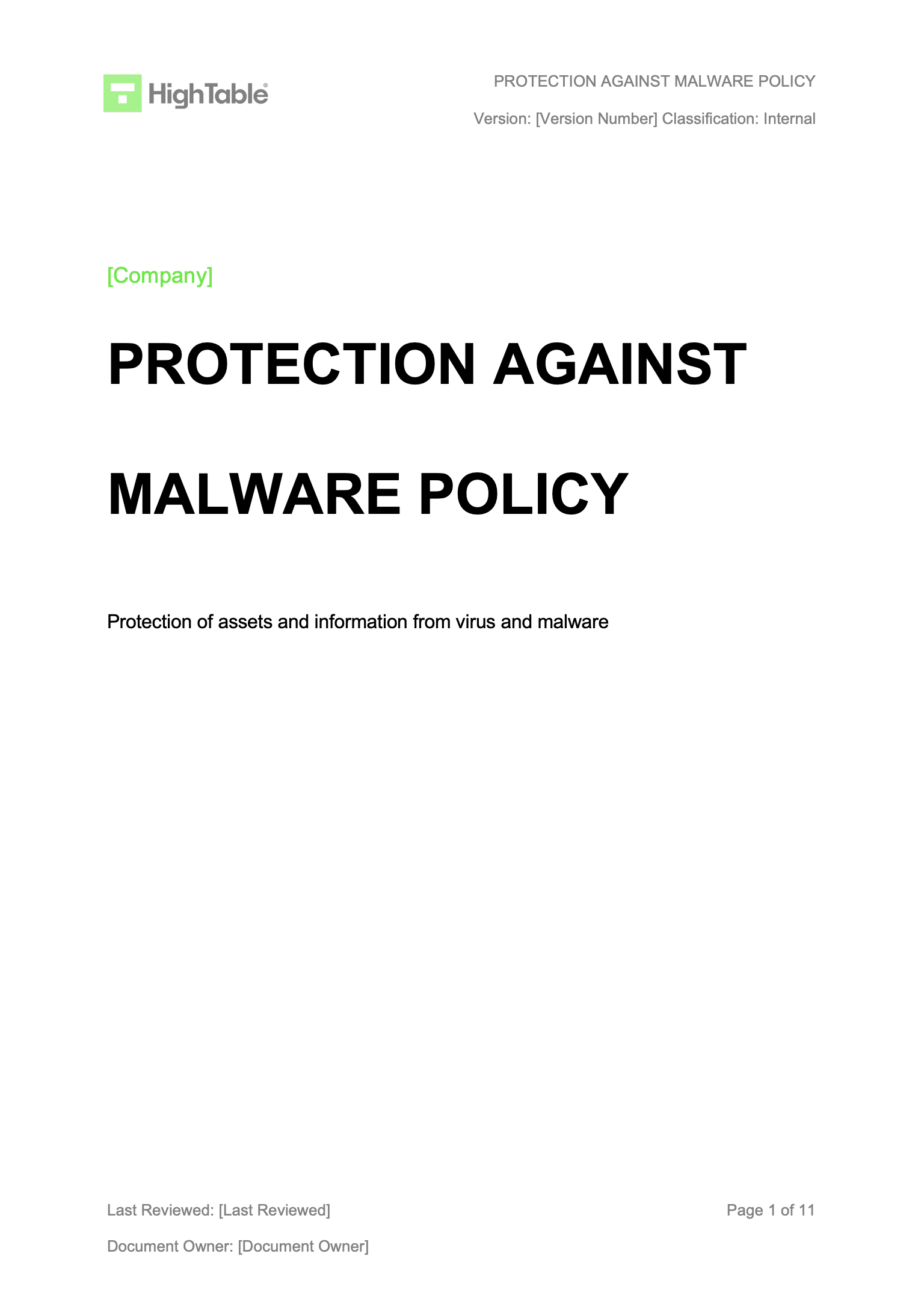
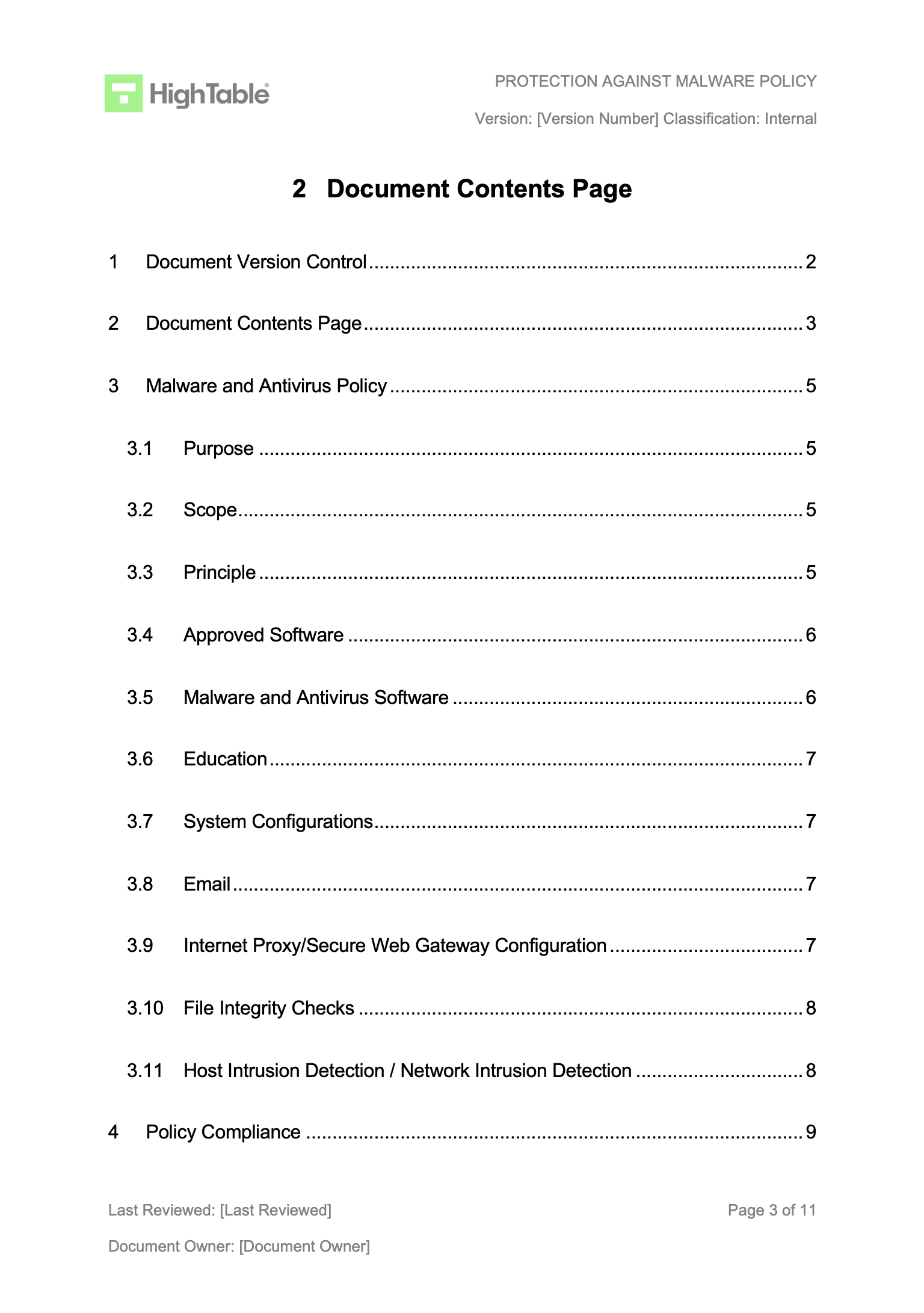
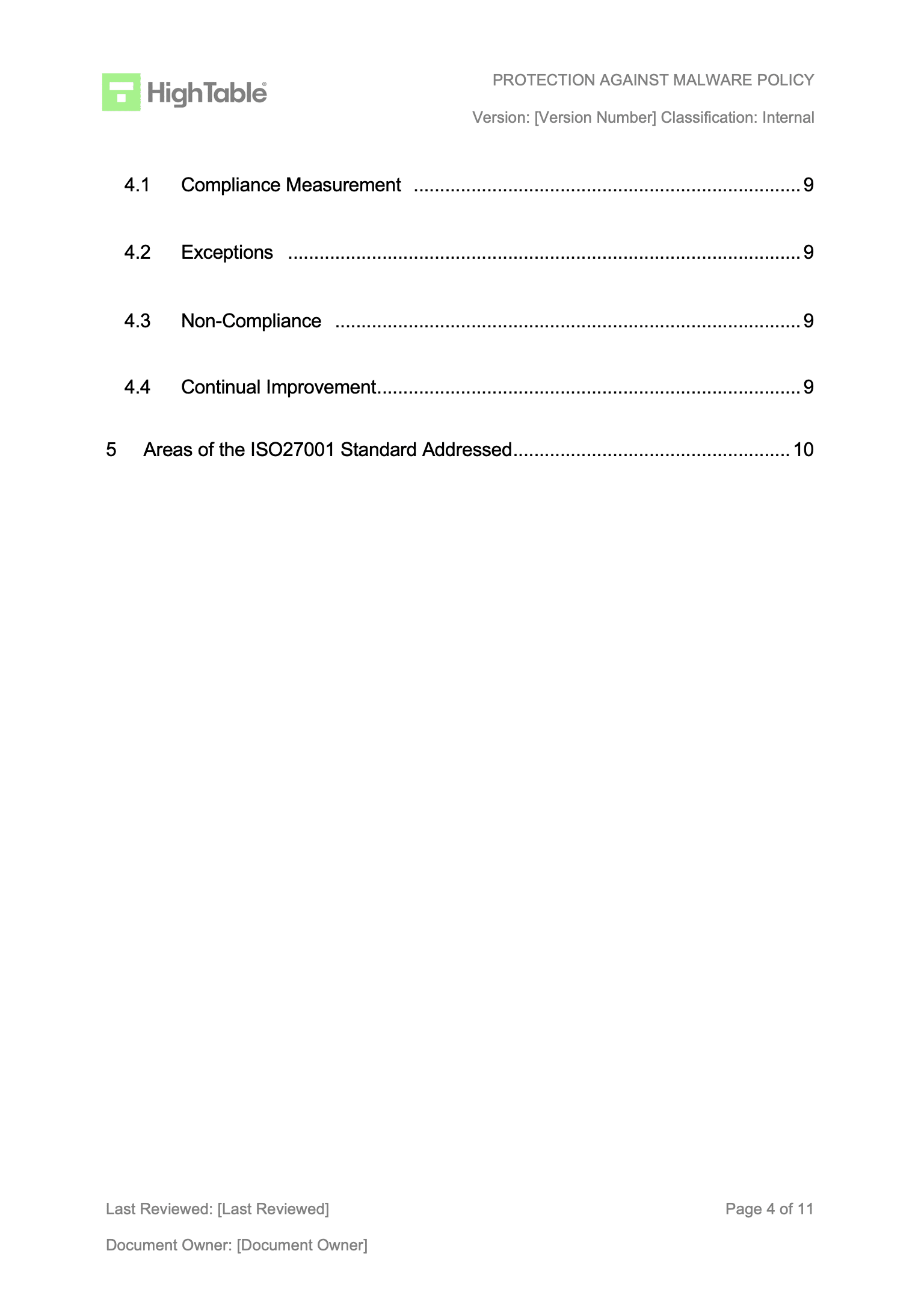
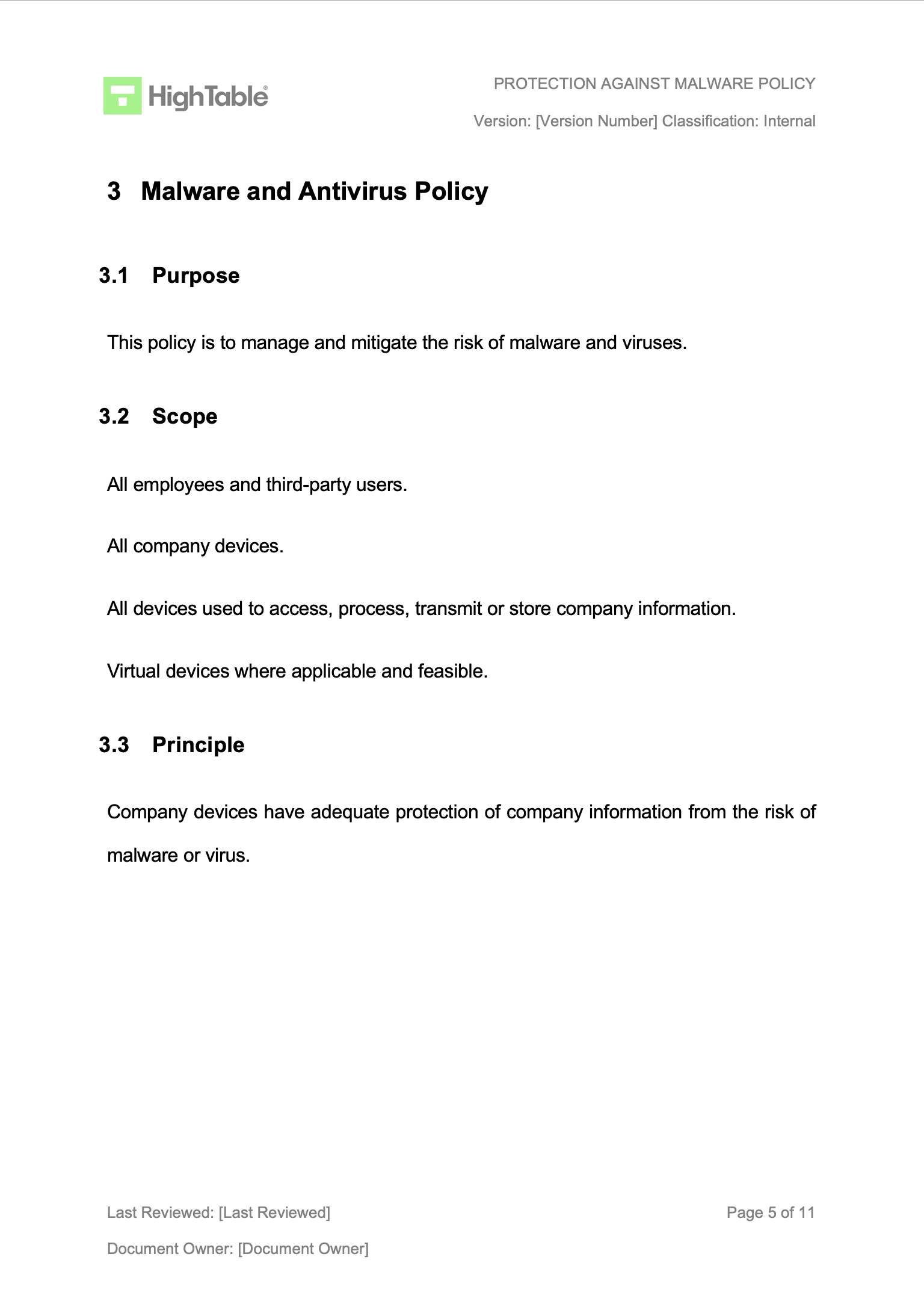
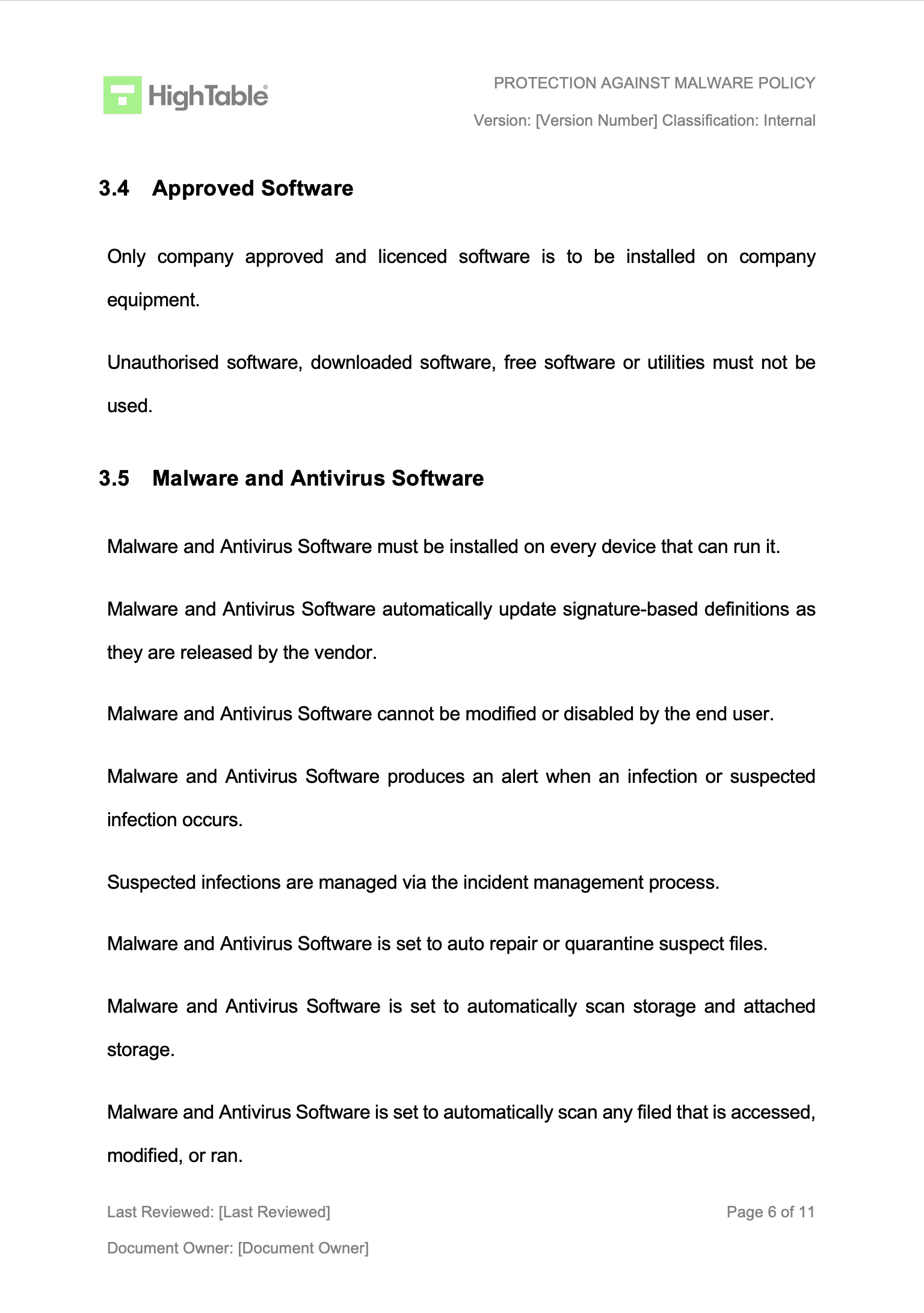
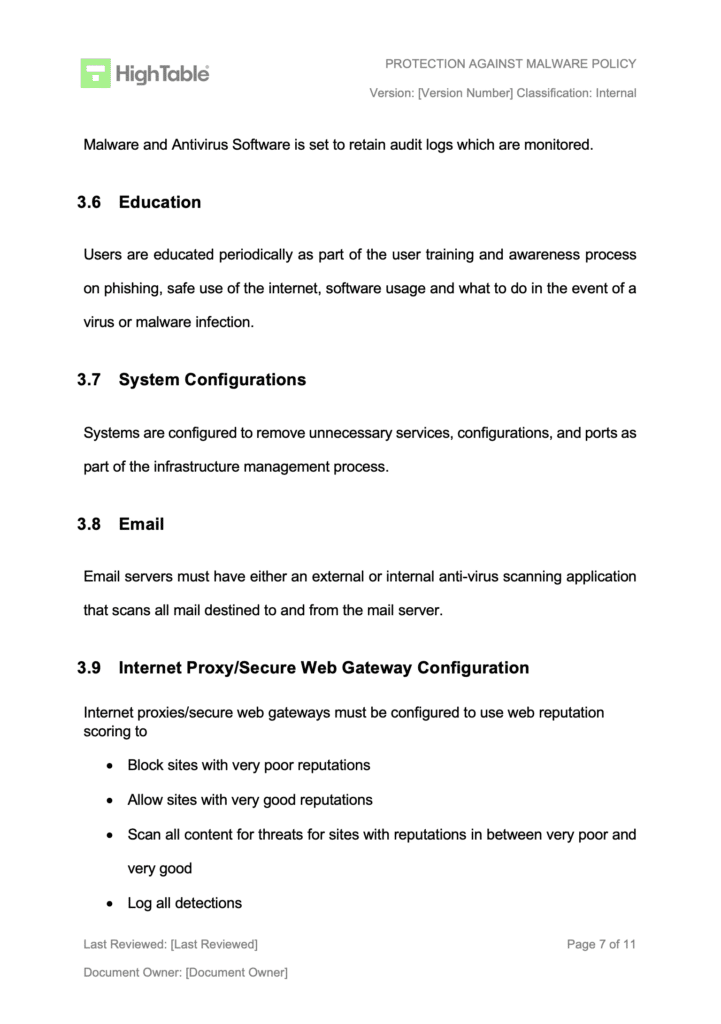
The anti malware and antivirus policy sets out your approach to protecting systems from malware, viruses and ransomeware as well as the use of privilege utilities and programs.
Antivirus Policy Example
An example of the ISO 27001 Anti Malware and Antivirus Policy.
How to implement ISO 27001 Annex A 8.18
Privileged utility programs are powerful tools capable of overriding system and application security controls. Implementing strict governance over these utilities is essential to prevent unauthorised changes and maintain system integrity. Follow these technical steps to align your infrastructure with ISO 27001 Annex A 8.18 requirements.
1. Formalise a Privileged Utility Usage Policy
- Identify and document all utility programs capable of bypassing system security controls, such as disk editors, packet sniffers, or kernel-level debuggers.
- Establish a formal “Rules of Engagement” (ROE) document that defines exactly when and how these tools may be used within operational environments.
- Result: A transparent governance framework that sets legal and technical boundaries for the use of high-risk software.
2. Provision Granular IAM Roles and MFA
- Enforce the Principle of Least Privilege by creating specific Identity and Access Management (IAM) roles that restrict utility access to a handful of authorised system administrators.
- Mandate Multi-Factor Authentication (MFA) for every execution attempt to ensure that a compromised password alone cannot grant access to powerful utilities.
- Result: Technical isolation of powerful tools, ensuring they are only accessible to verified and authorised identities.
3. Revoke Persistent Access through Just-In-Time (JIT) Elevation
- Implement a Privileged Access Management (PAM) solution to provide “Just-In-Time” elevation, granting utility access only for a specific, pre-approved time window.
- Ensure that all persistent administrative rights are revoked, requiring users to request a token or temporary password for each session.
- Result: Elimination of “standing privileges,” significantly reducing the window of opportunity for attackers or malicious insiders.
4. Segment and Isolate Utilities from Standard Operational Systems
- Separate privileged utility programs from standard application software by placing them in secure, restricted-access directories or dedicated management subnets.
- Utilise application whitelisting or binary signing to ensure that only approved versions of these utilities can execute on operational systems.
- Result: Prevention of accidental or unauthorised execution of high-risk tools by standard users or automated malware.
5. Execute Comprehensive Audit Logging and Session Monitoring
- Configure all systems to export detailed logs of privileged utility usage, including user identity, timestamps, and specific commands executed, to a centralised SIEM.
- Utilise session recording features within a PAM tool to capture a visual or text-based record of all activities performed during an elevated session.
- Result: A verifiable audit trail for ISO 27001 compliance and a forensic roadmap in the event of a security incident.
6. Perform Periodic Reviews of Utility Inventories and Permissions
- Conduct quarterly technical audits to verify that the list of authorised utilities remains accurate and that unused or outdated tools are removed.
- Validate that all personnel with access to these tools still require them for their current job function, revoking access immediately if roles change.
- Result: Continuous hygiene of the privileged environment, preventing the accumulation of “orphan” tools or excessive permissions.
Check Your Work?
You built it yourself. Maybe with AI. But will it pass the audit?
Don’t gamble – let an ISO 27001 Lead Auditor check your work.
What will an auditor check?
The audit is going to check a number of areas. Lets go through the main ones
1. That you have documentation
What this means is that you need to show that you have documented your Use of Privileged Utility Programs. Can you show a list of users and what utility programs they have installed. Are you able to evidence a request and approval process and tie that to the list of users and programs to show the process was followed.
2. That you have have implemented Use of Privileged Utility Programs appropriately
They will look at systems to seek evidence of utility programs. They will question you on the process and seek evidence that you have followed it. They want to see evidence of utility program restriction and the process in operation.
3. That you have conducted internal audits
The audit will want to see that you have tested the controls and evidenced that they are operating. This is usually in the form of the required internal audits. They will check the records and outputs of those internal audits.
ISO 27001 Annex A 8.18 FAQ
Privileged utility programs are specialized tools capable of performing deep system maintenance, diagnostics, or configuration that standard users cannot perform. These applications often have the ability to bypass operating system security, read encrypted data, or modify critical logs.
Database Tools: SQL Management Studio, phpMyAdmin (can directly edit data tables).
Network Tools: Wireshark, Nmap, TCPDump (can sniff traffic and bypass firewalls).
Disk/File Tools: Partition Magic, Hex Editors (can modify raw data on a disk).
Password Tools: KeyGens, Crackers (strictly prohibited in most environments).
These programs represent a high-risk “God Mode” that can render your standard security controls useless if misused. Because they are designed to troubleshoot or repair systems at a root level, they often ignore file permissions, audit trails, and access control lists.
Risk of Fraud: A user could directly edit a database to change financial records without leaving a standard audit trail.
Data Leakage: Network sniffers can capture sensitive passwords or customer data moving across the network.
System Instability: Improper use of disk editors can corrupt entire servers.
Access must be restricted to a specific, identified subset of technical staff, such as System Administrators and Database Administrators (DBAs). Standard business users (e.g., HR, Marketing, Sales) should never have these tools installed on their devices.
Authorization: Access should be granted only after a formal request and approval process.
Segregation: The person approving the access should not be the person requesting it.
Least Privilege: Access should be revoked immediately once the specific task or role requirement ends.
Segregation of duties ensures that the individuals using these tools are not the same individuals authorizing their use or auditing their output. This prevents a single “super-user” from making unauthorized changes and then covering their tracks.
Approval: A manager or different IT lead must approve the installation of the tool.
Usage: Ideally, developers should not have privileged utility access to live production environments.
Verification: Logs of these programs should be reviewed by an independent security role.
You must provide an inventory of approved utility programs and evidence that their use is restricted and authorized. Auditors will look for proof that these dangerous tools are not installed on standard user machines and that their use is logged.
The “Specialist List”: A documented list of who is allowed to use which tool.
Audit Logs: Records showing when these tools were used (e.g., “Admin X used Wireshark on Date Y”).
Installation Blocks: Technical controls (like AppLocker or Group Policy) that prevent regular users from installing these tools.
No, the best practice is to install them only “Just-In-Time” (JIT) or restrict them to specific maintenance windows. Leaving powerful hacking or diagnostic tools permanently installed on a server increases the “attack surface” if that server is compromised by an attacker.
Ad-Hoc Use: Install the tool for a specific incident, use it, and remove it immediately after.
Dedicated Jump Boxes: Run these tools only from a secure, isolated “admin console” rather than the production server itself.
Review Cycle: Annually review all installed utilities and remove those no longer needed.
Related ISO 27001 Controls
ISO 27001 Templates

Further Reading
About the author
